The project
A museum of calligraphy is a building about the made mark. Everything it will hold was set down by a hand that could not take the stroke back. It follows that the building itself should be finished in a material that behaves the same way. Cemher Microtadelakt is laid and burnished by hand, in millimetres, over a prepared substrate. There is no roll, no sheet, no repeat — every panel keeps a record of how it was worked.
Microtadelakt is a mineral surface. It is lime-based, and lime hardens by absorbing carbon dioxide from the air, so the wall goes on setting long after the crew has moved off it. Burnished, it closes down to a dense skin that tolerates water and heavy public traffic, which is what a museum concourse becomes once the doors open. We supplied the system and applied it with our own artisans, on our own payroll rather than subcontracted.
A wall worked by hand keeps a record of the hand that worked it.
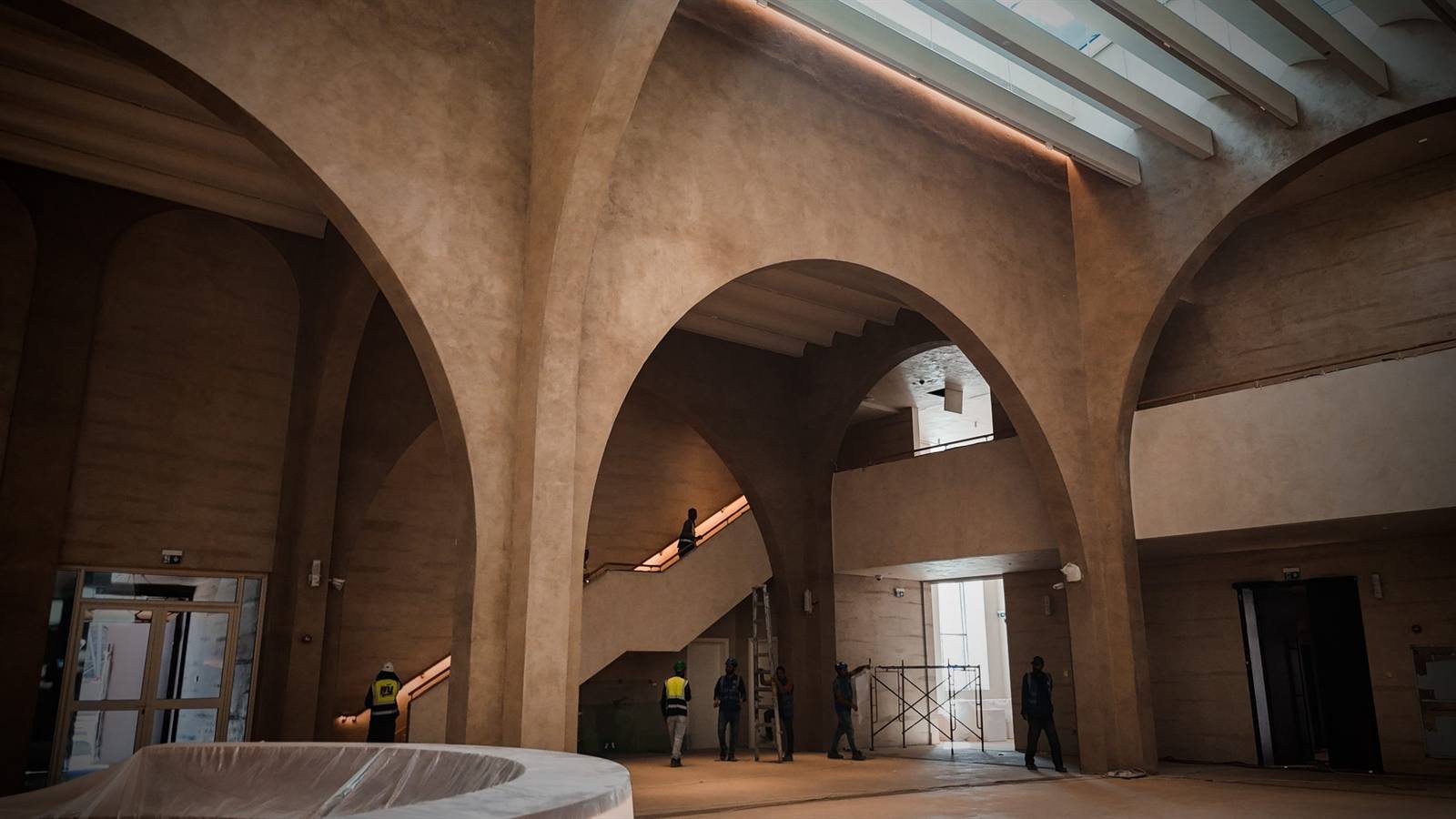
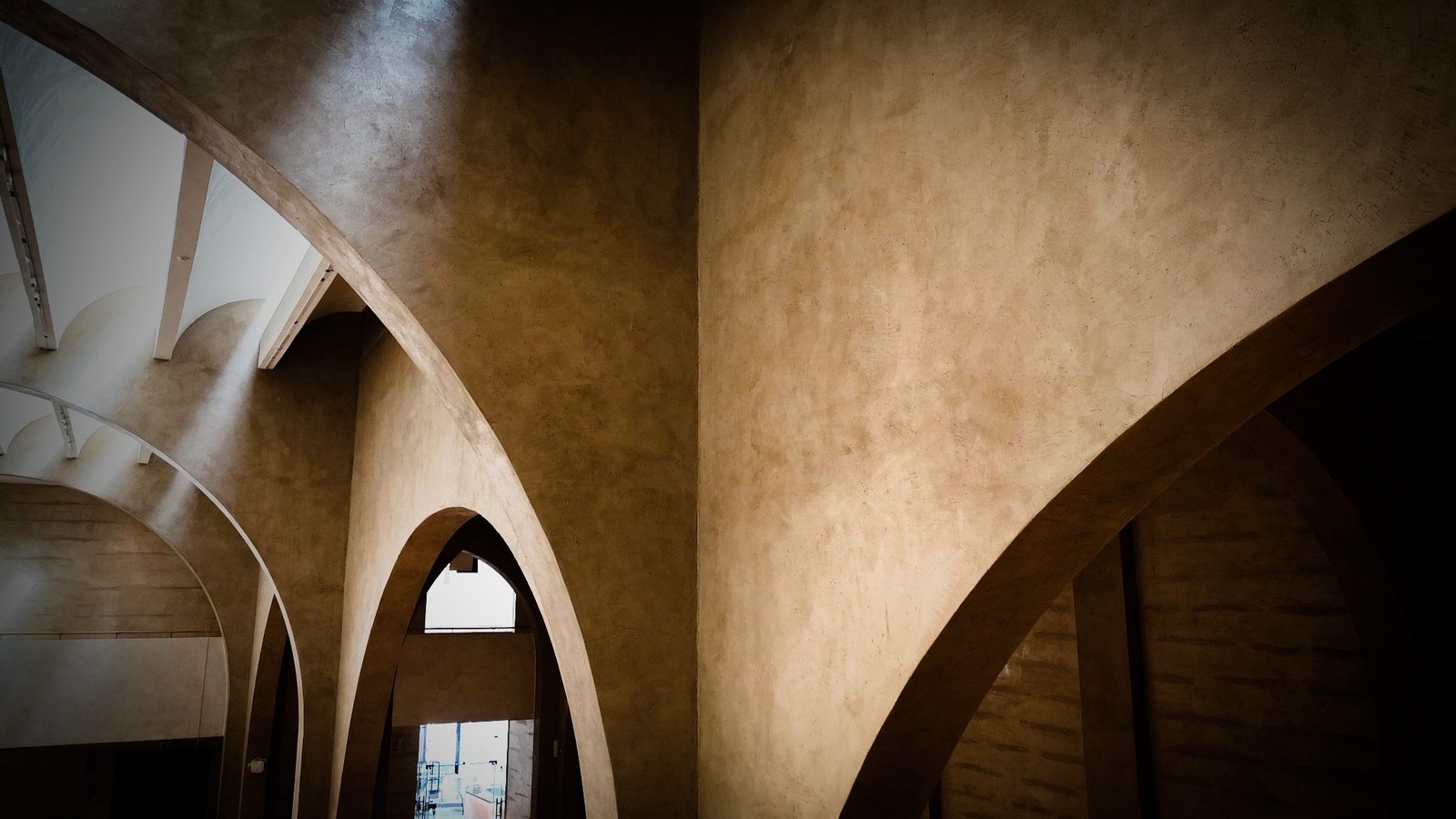
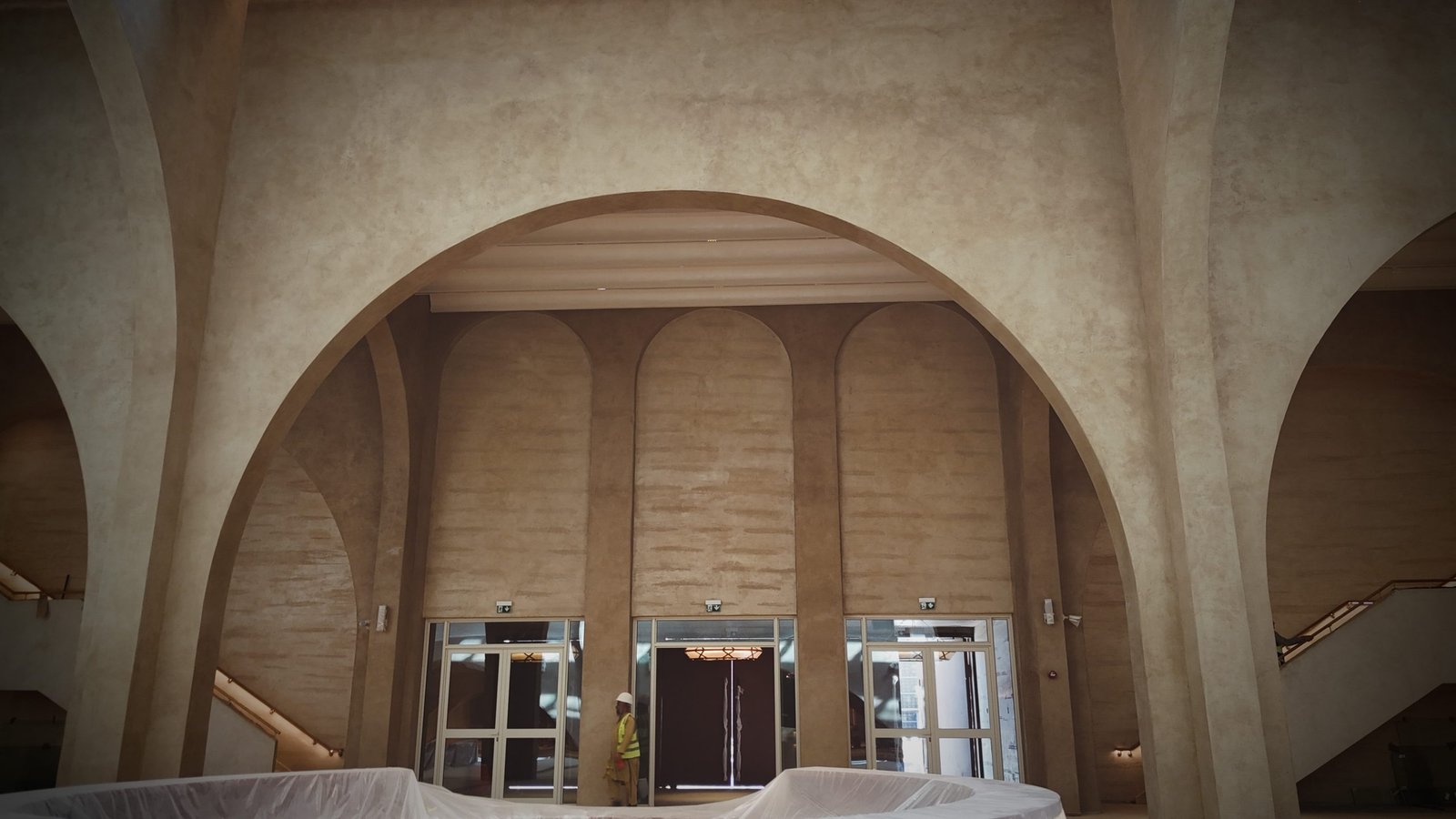
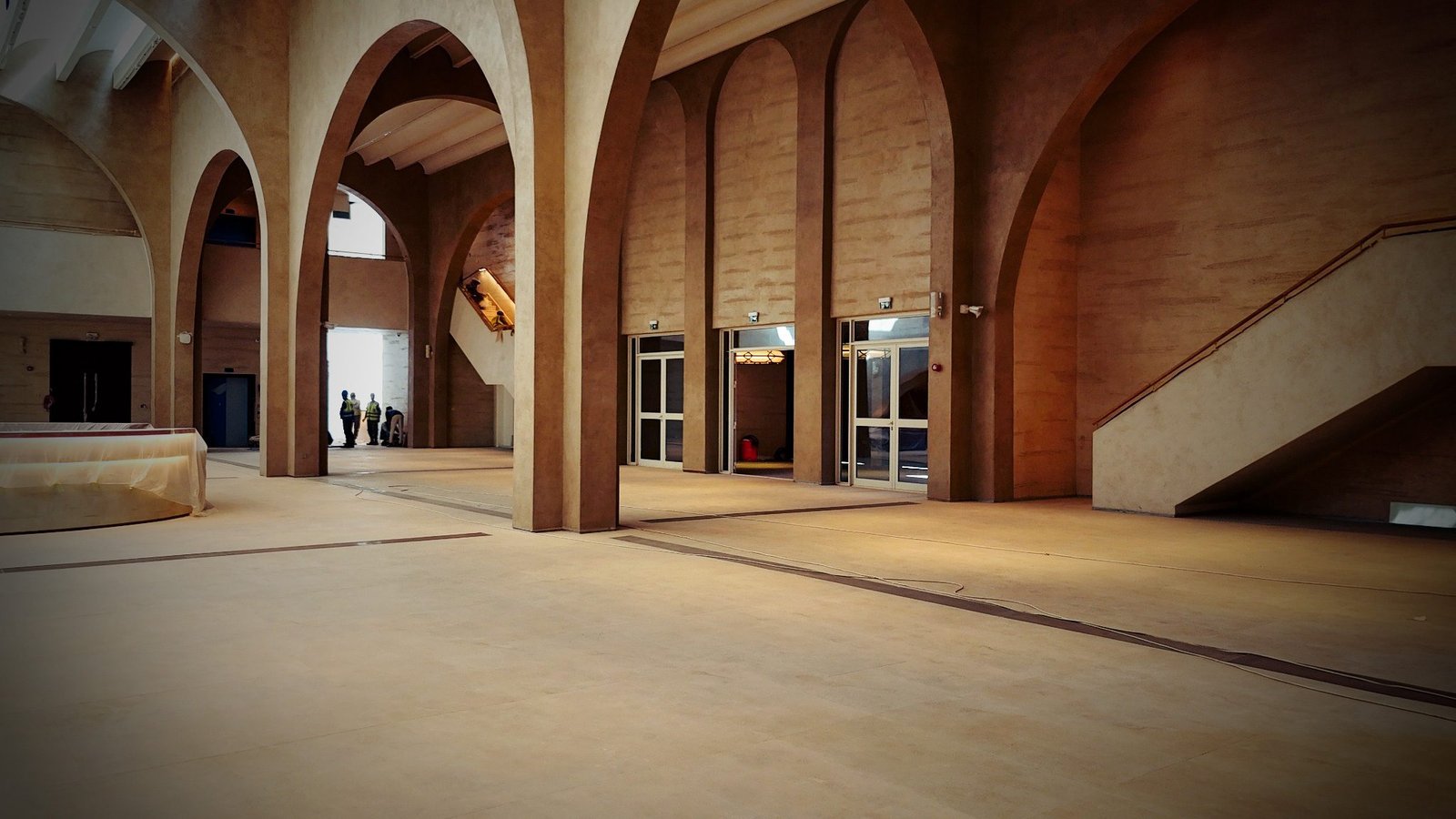
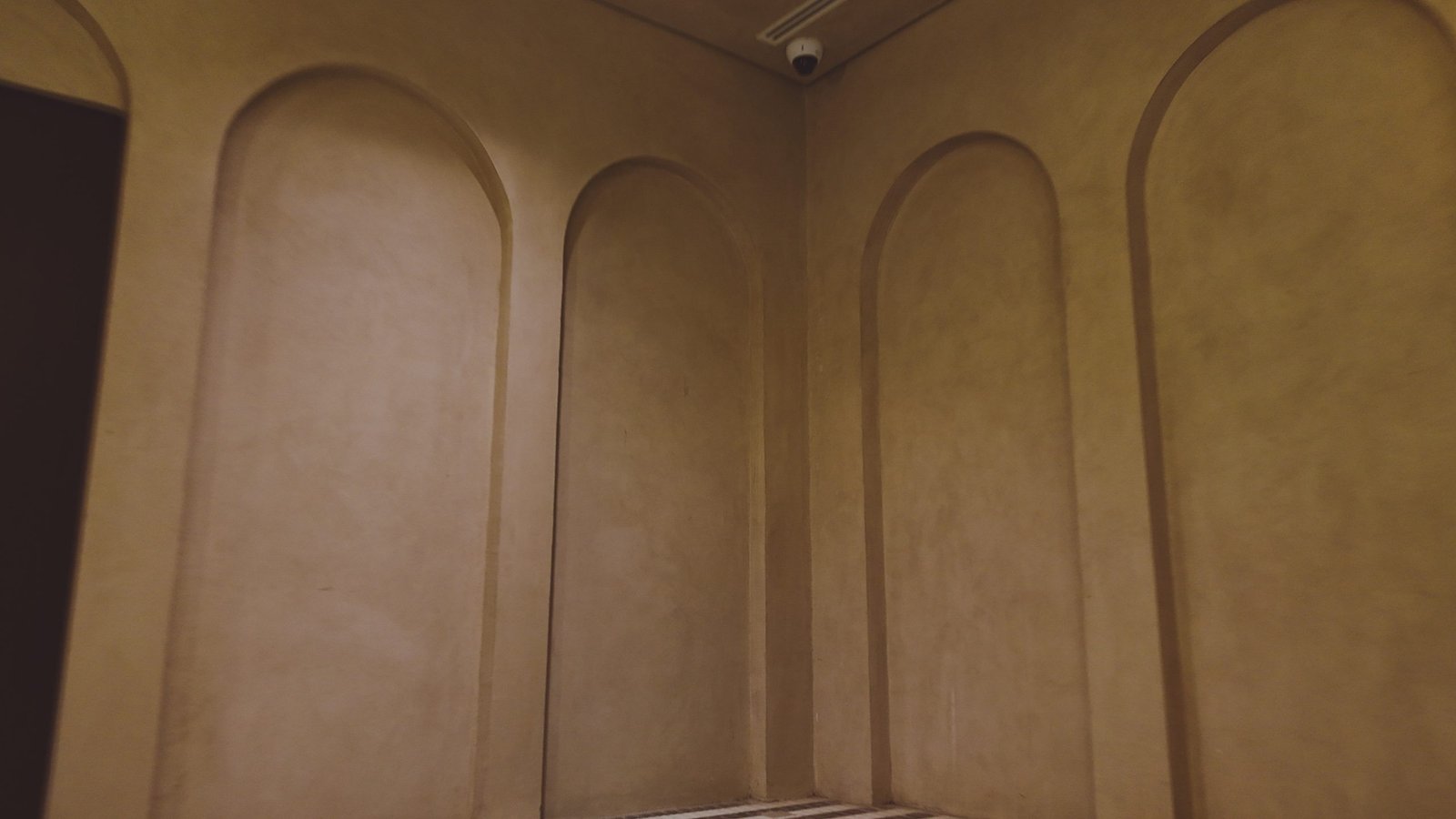
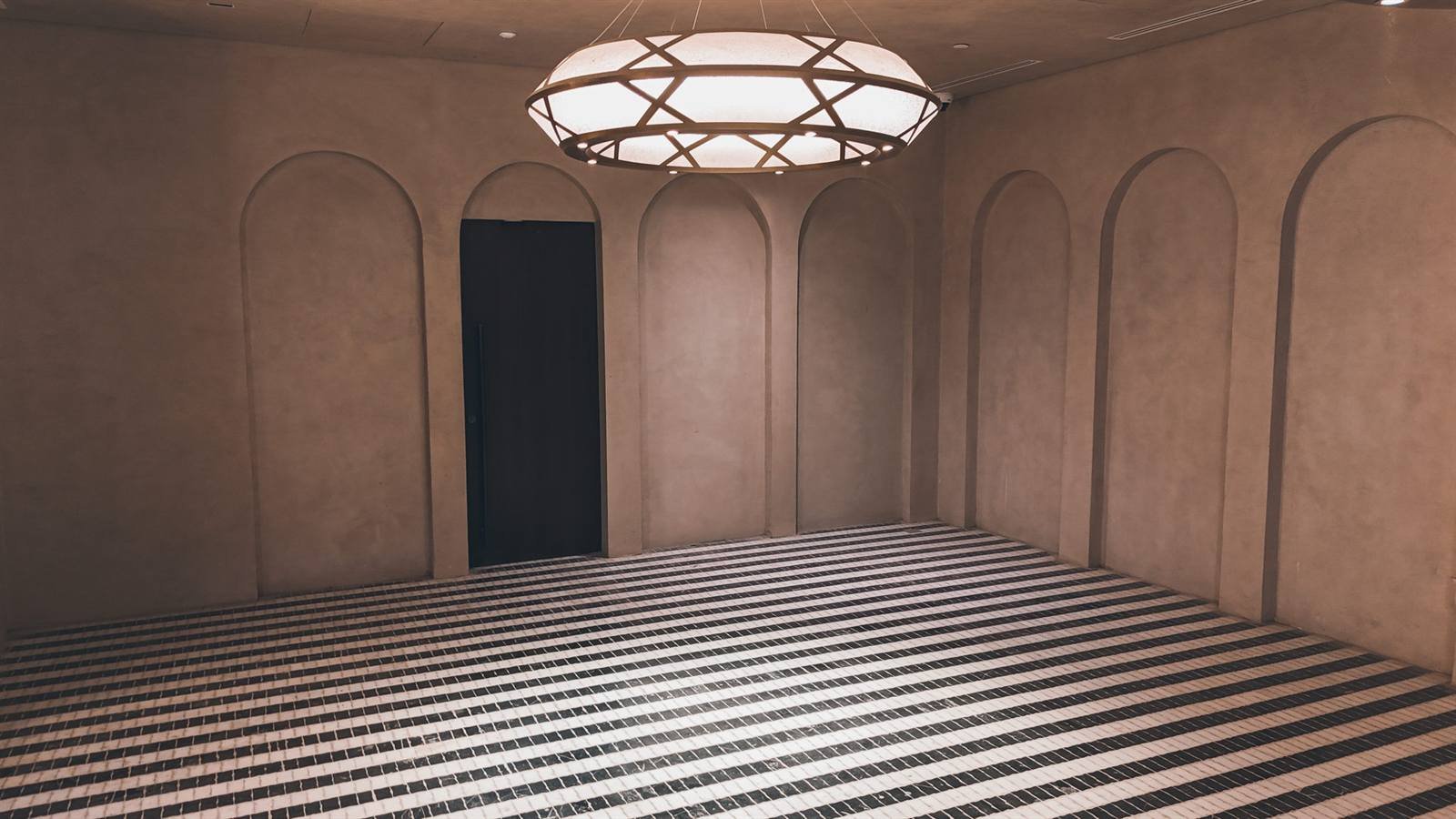
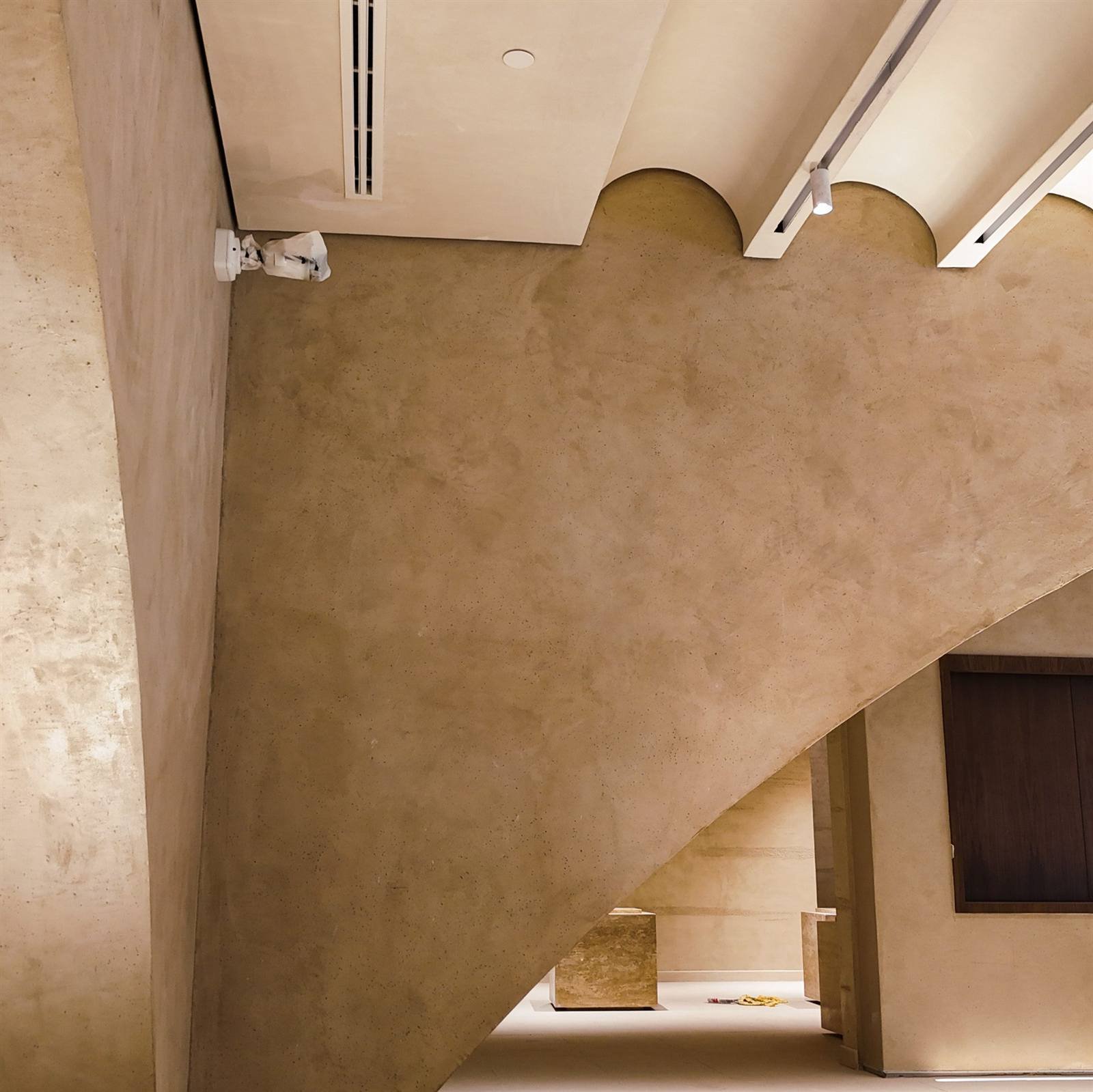
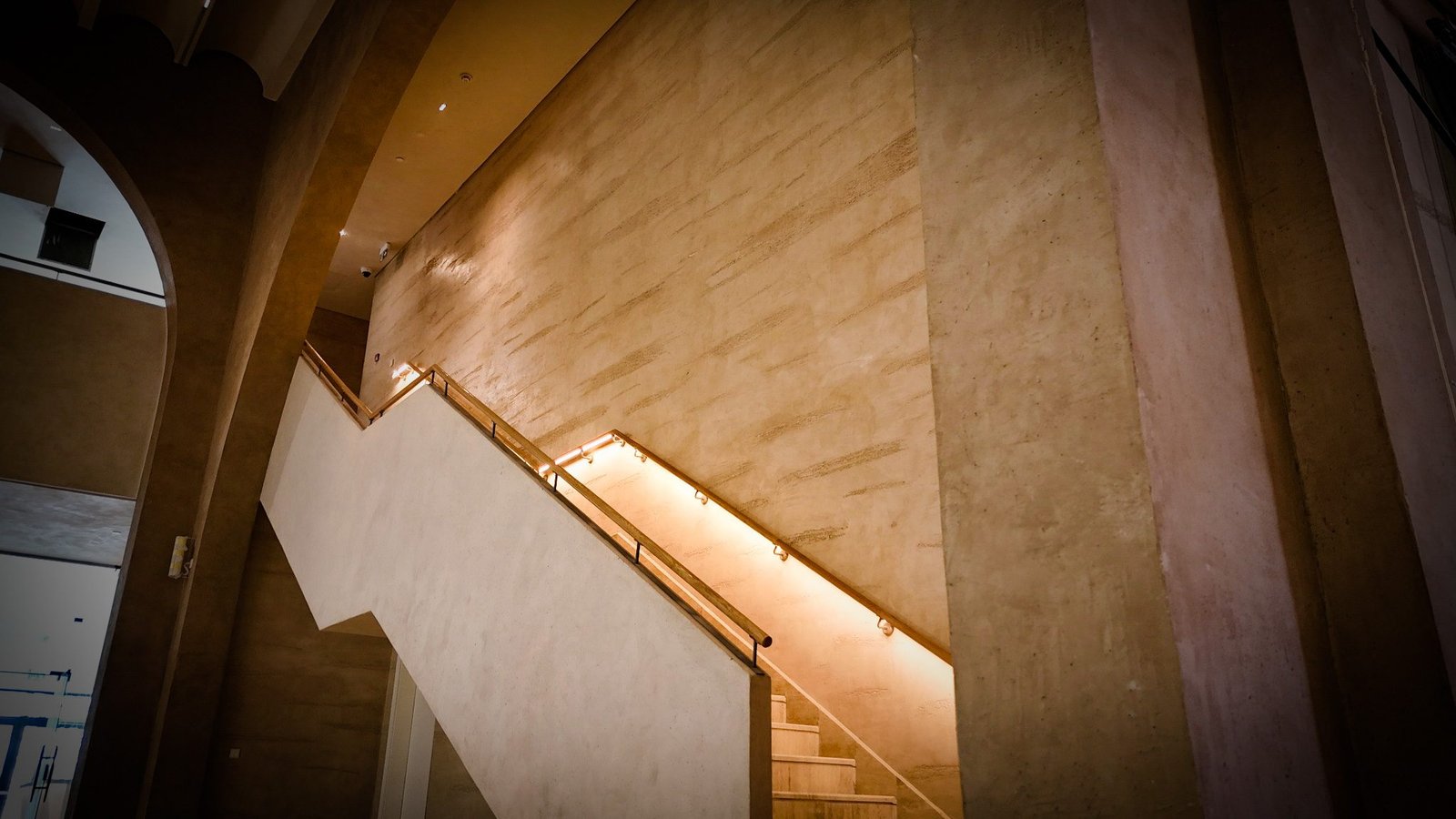
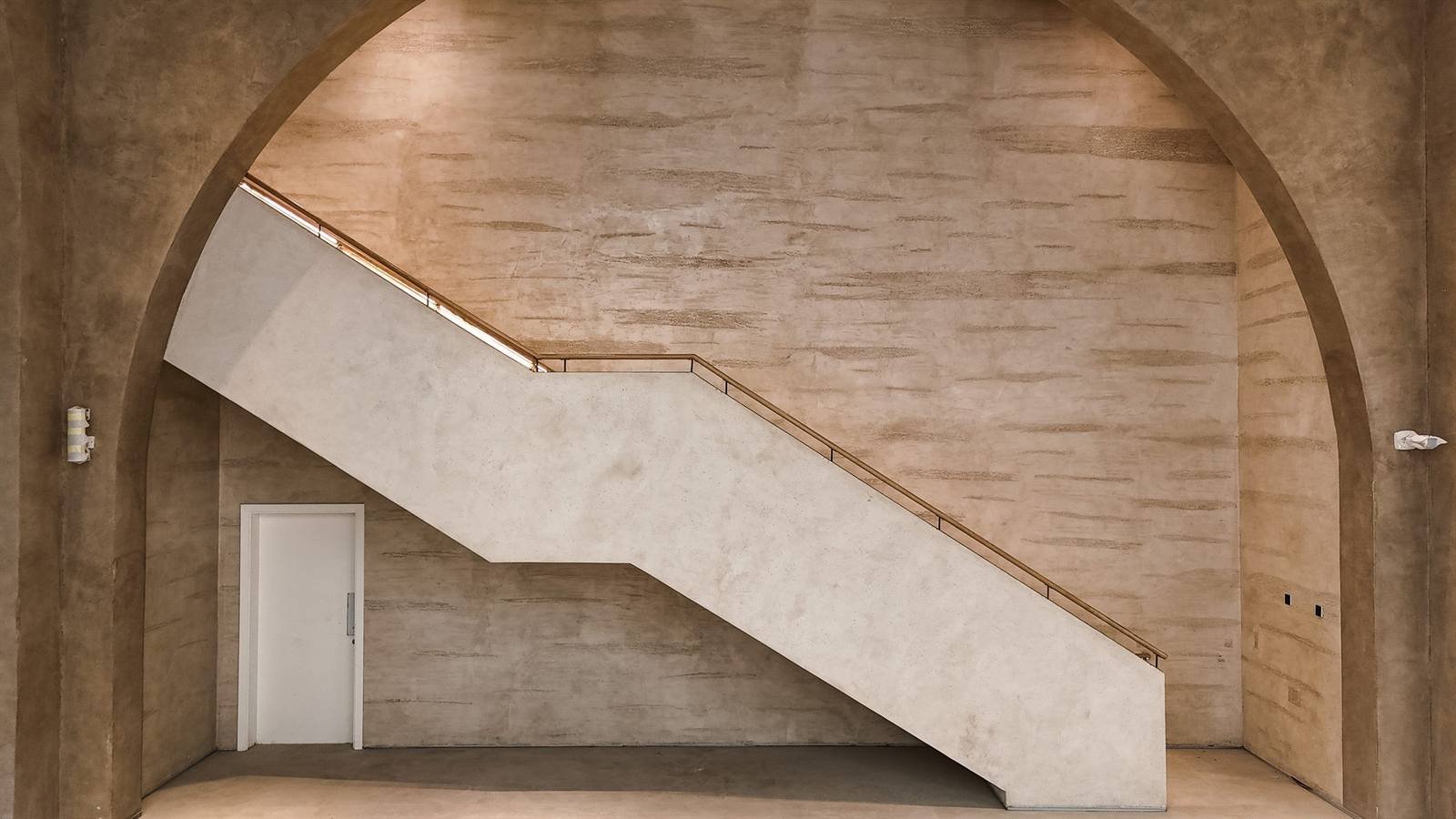
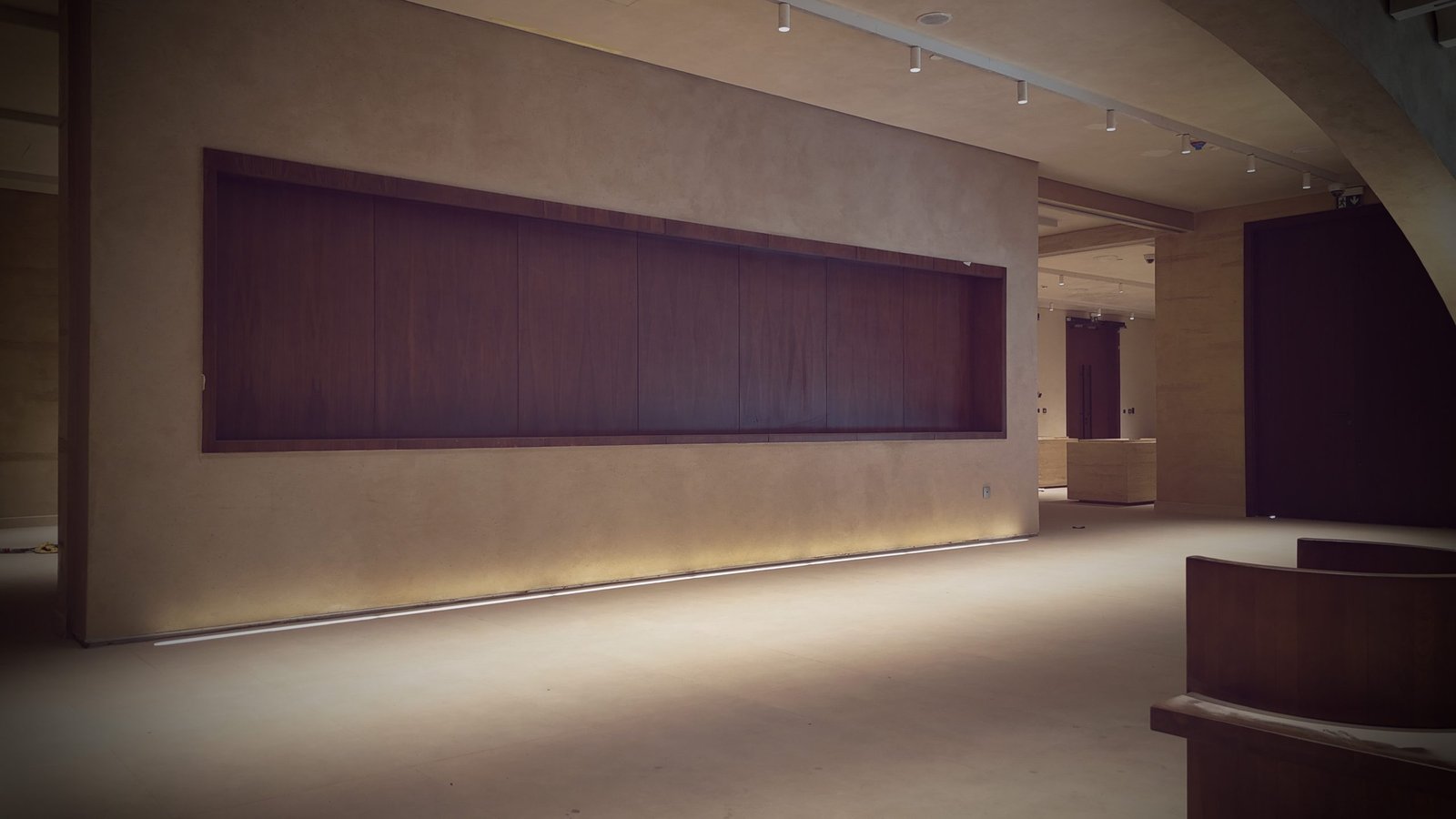
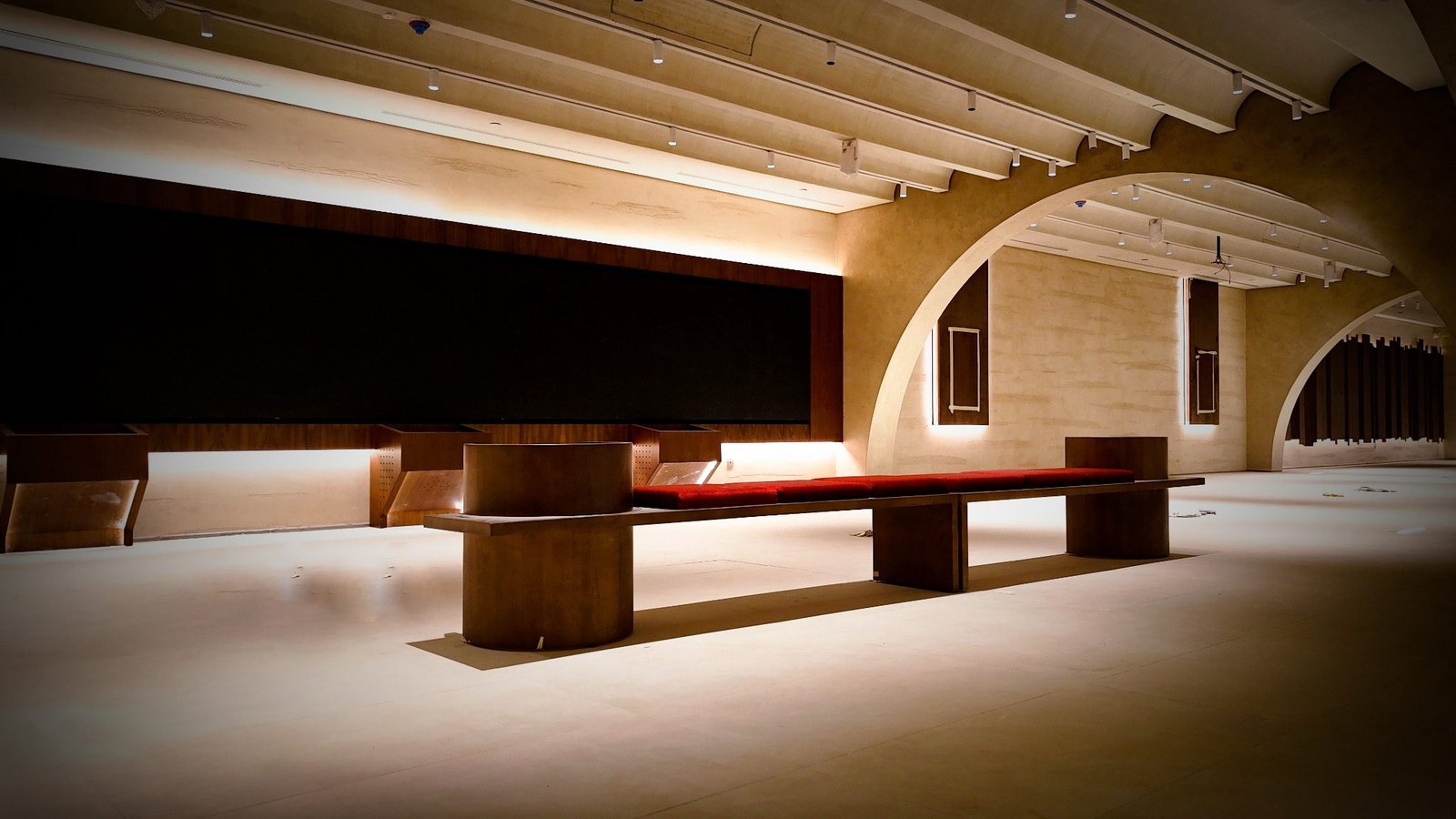
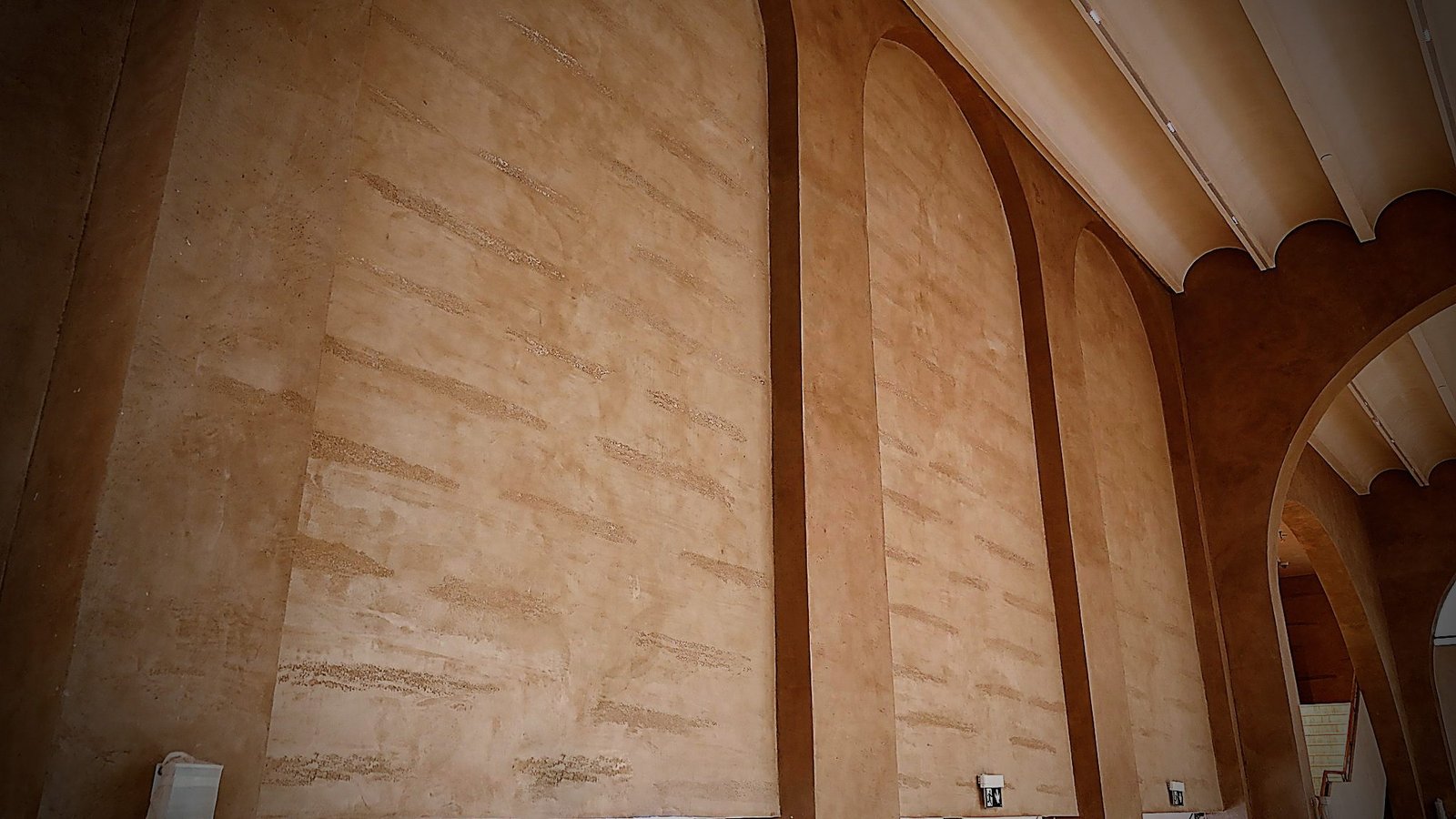
The geometry is the demanding part. The atrium is built from intersecting arches meeting overhead under a ribbed skylight; the main hall runs on arched piers; long walls are set with arched-top recessed panels between pilaster bands. A burnished lime plaster over a curve has to be worked in the direction of the curve, and the trowel has to reach the springing line and the crown of the arch without a shift in sheen. Soffits are worked overhead, wet, against gravity. Where a curved stair soffit meets a scalloped arch, the two surfaces are brought together in one continuous pass — stop and restart, and the join will show in raking light.
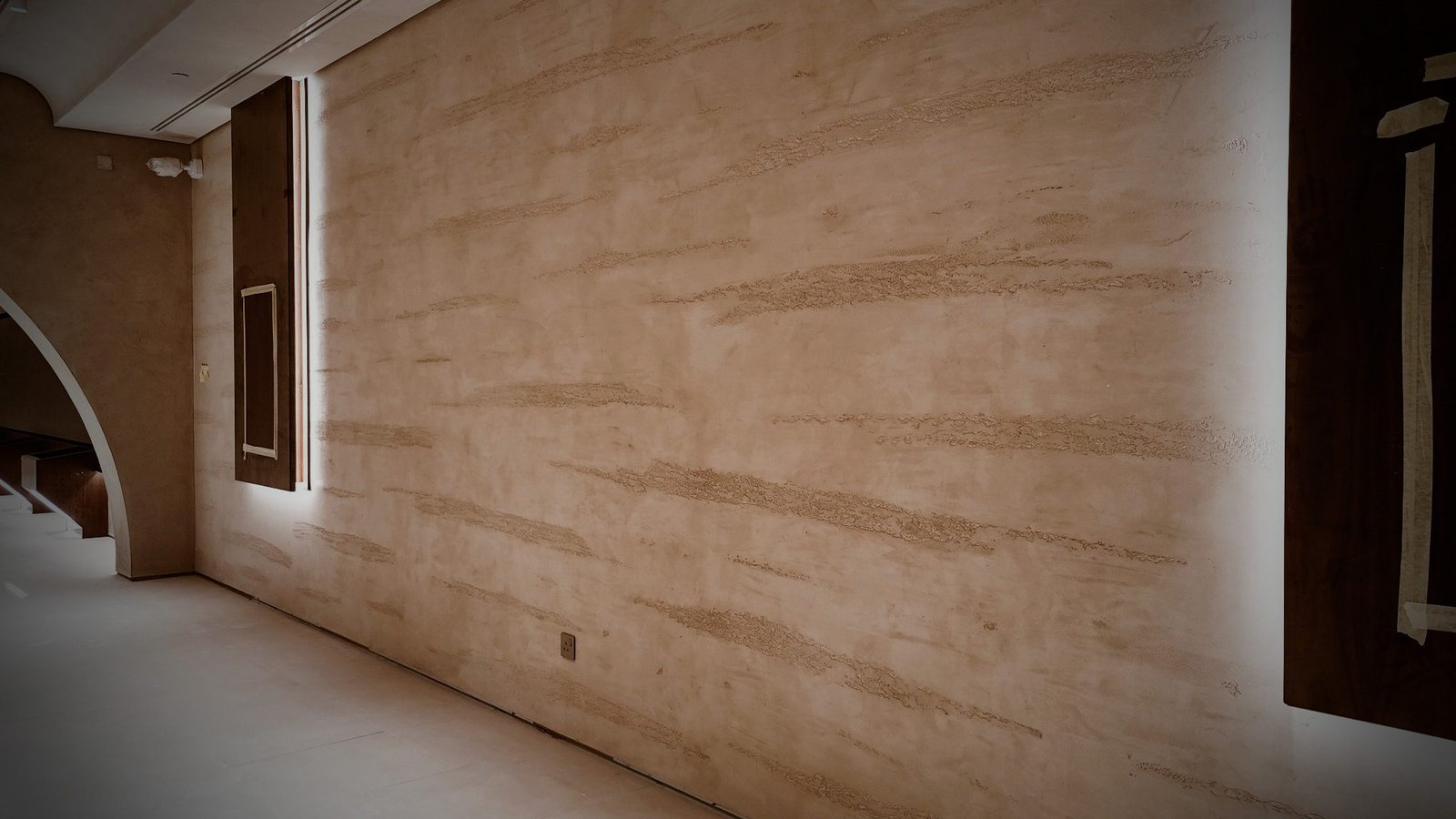
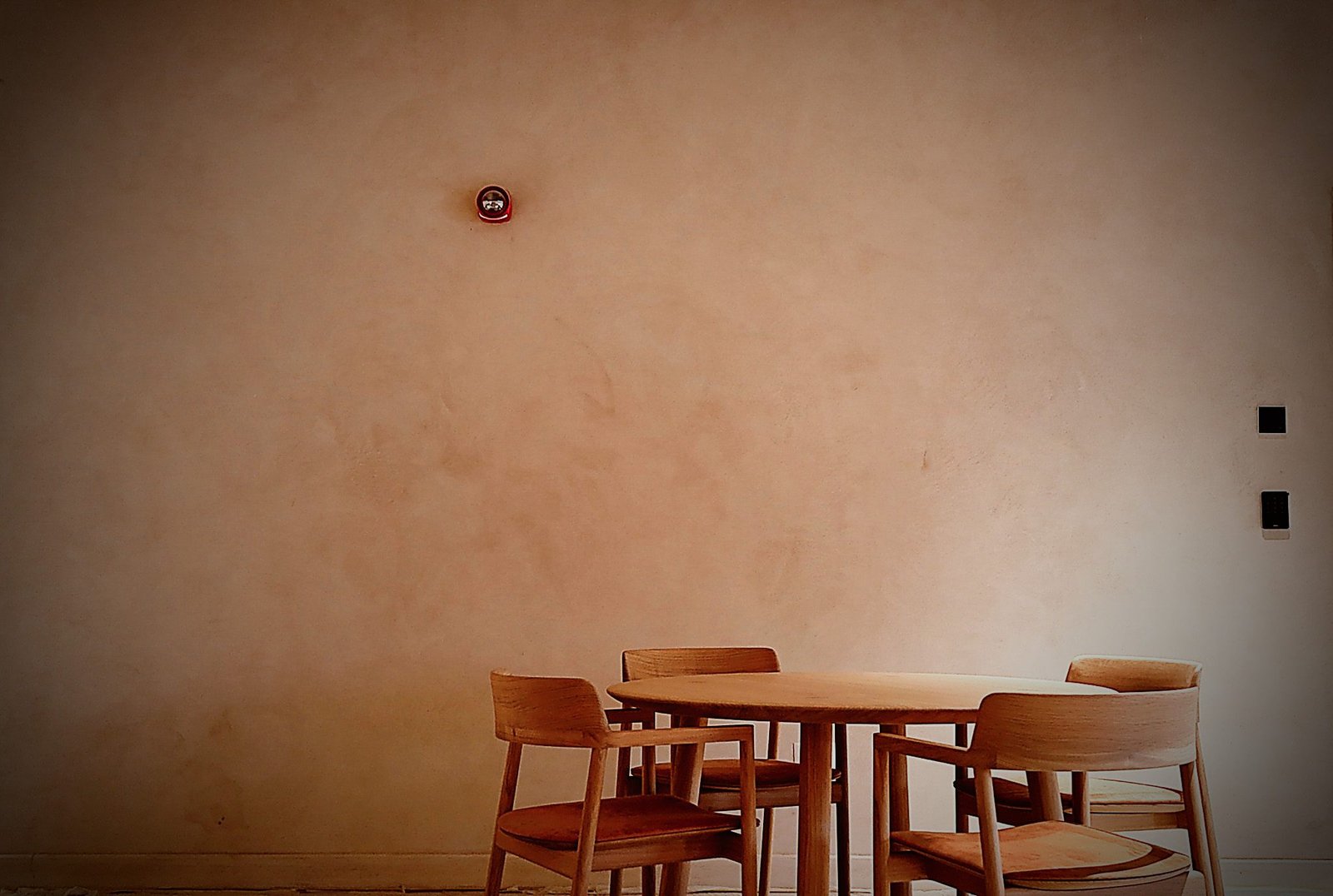
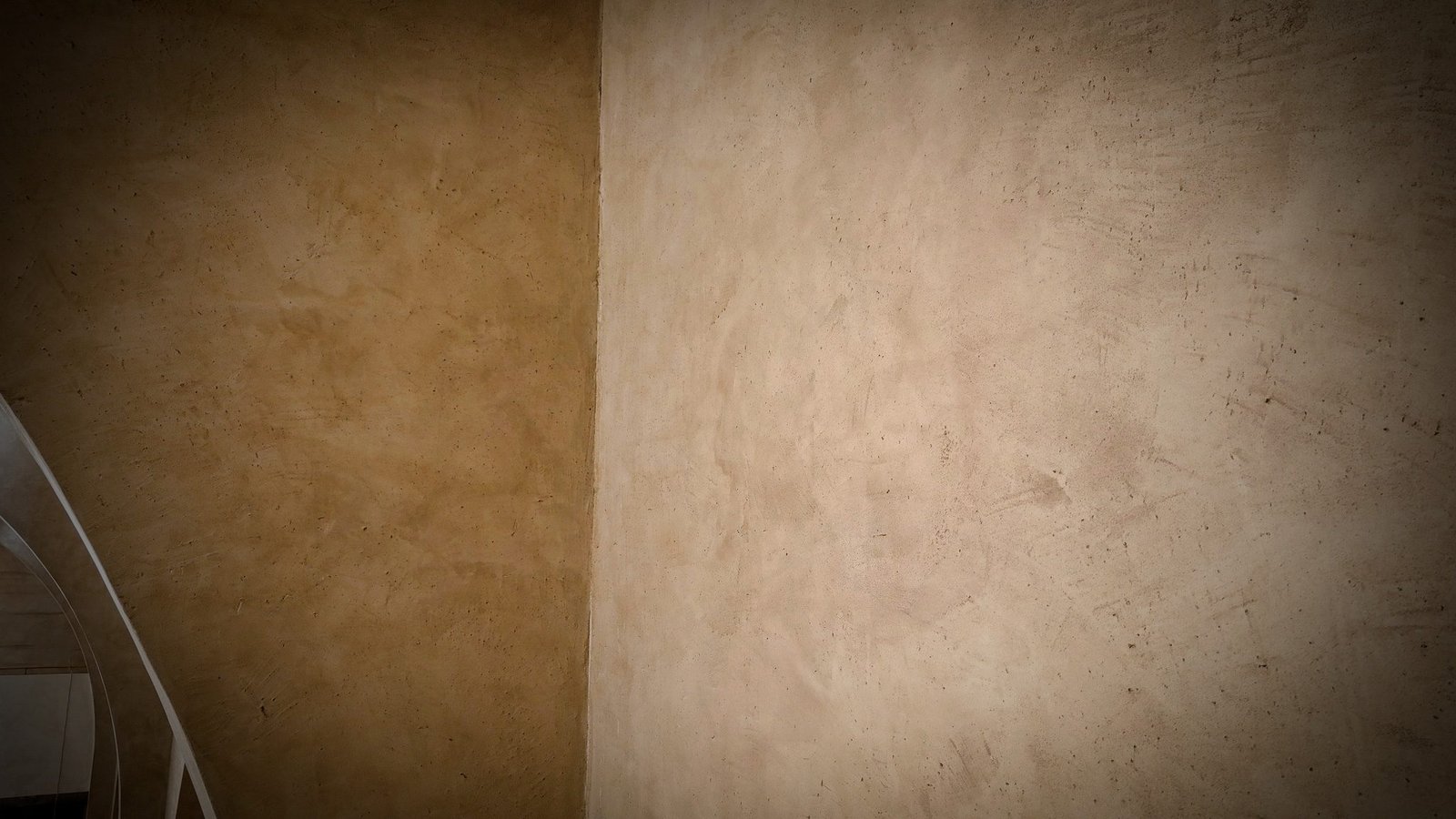
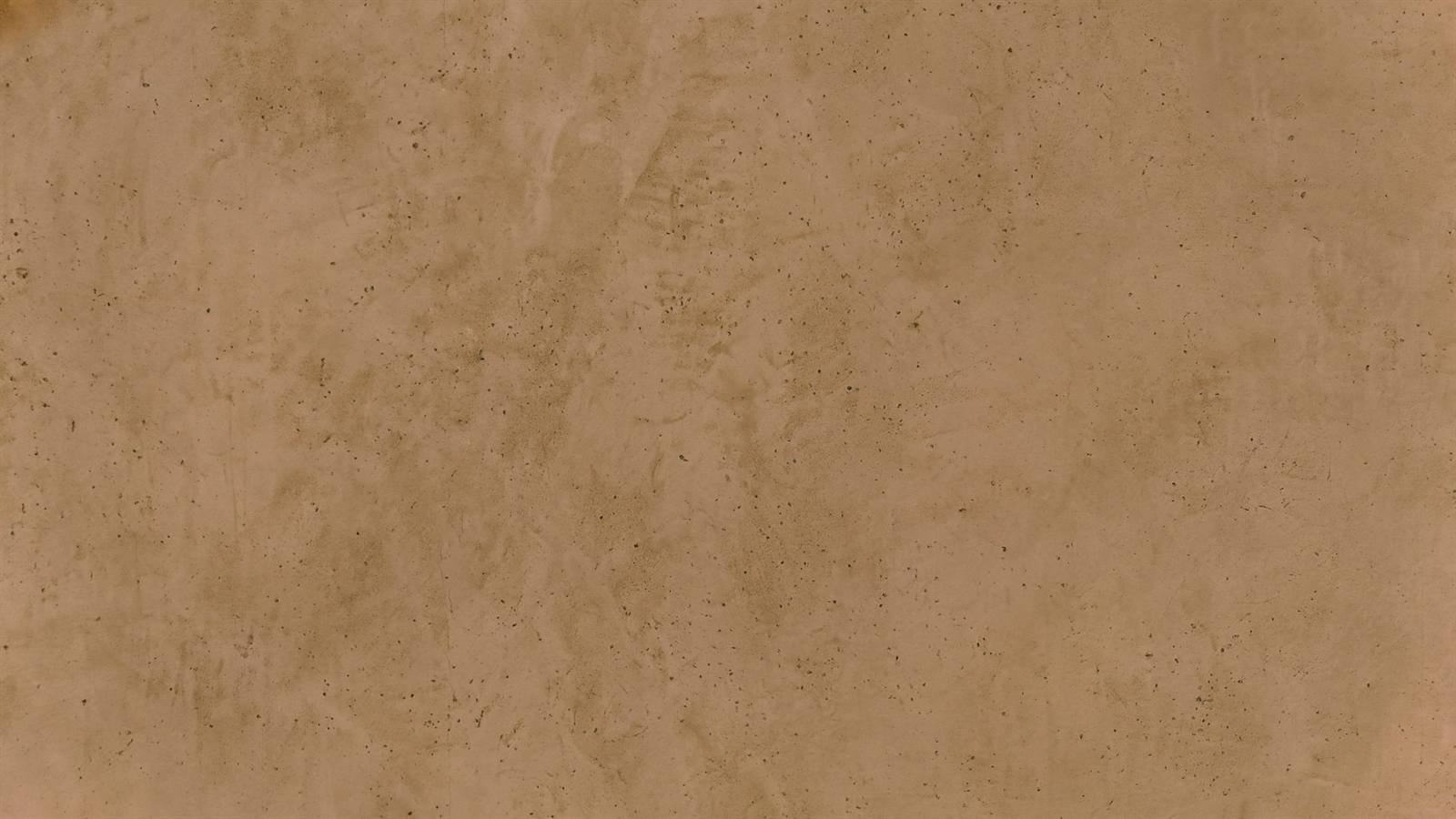
Not all of it is polished flat. Corridor walls and several full-height passages are worked with horizontal dragged striations, the bands standing proud enough to catch light across them and read close to rammed earth, though they are lime and only a few millimetres deep. Elsewhere the finish is left smooth with soft ochre clouding, or opened with pinhole pores and fine scratch marks. Corner details set one register against the other: ochre against pale sand, a faintly striated wall meeting a pronounced one. Where a project wants that horizontal banding in real structural depth, we build it in rammed earth instead.
The building is not open. Several of these frames were taken with scaffolding still standing, protective sheeting down and our crews at work, and we have left them in rather than wait for a cleaned set — they show the finish as it is actually applied and cured on site. As a natural mineral surface, it contributes to WELL, LEED and Mostadam targets on cultural work of this kind.
Materials on this project
Supplied and applied by our own artisans. The links go to the material itself — the finish, the range, and the technical data needed to specify the same surface.
Cemher Microtadelakt — sand tones across the atrium, halls and stairs