Skip to content
 EARTH LAYERS
Send your finishes schedule
EARTH LAYERS
Send your finishes schedule






EARTH LAYERS
Send your finishes schedule
The journal
Rammed earth, clay and lime — notes from the Gulf
What we have learned building rammed earth in Dubai and Abu Dhabi, applying clay plaster through the region, and finishing wet rooms in lime and tadelakt — written for the architects, contractors and homeowners who specify it.
Topic
All
Rammed earth (20)
Clay plaster (15)
Lime plaster & tadelakt (10)
Microcement (2)
Acoustic plaster (1)
Resin bound aggregate (4)
Rammed earth
The rammed earth page →Is rammed earth waterproof? How earth walls handle water
Earth walls are water-resistant rather than waterproof. What that means in practice, how rain, humidity and ground salts actually act on a compacted wall, and the details that keep water where it belongs. Read →Specifying rammed earth in Abu Dhabi: what architects need to know at concept and tender
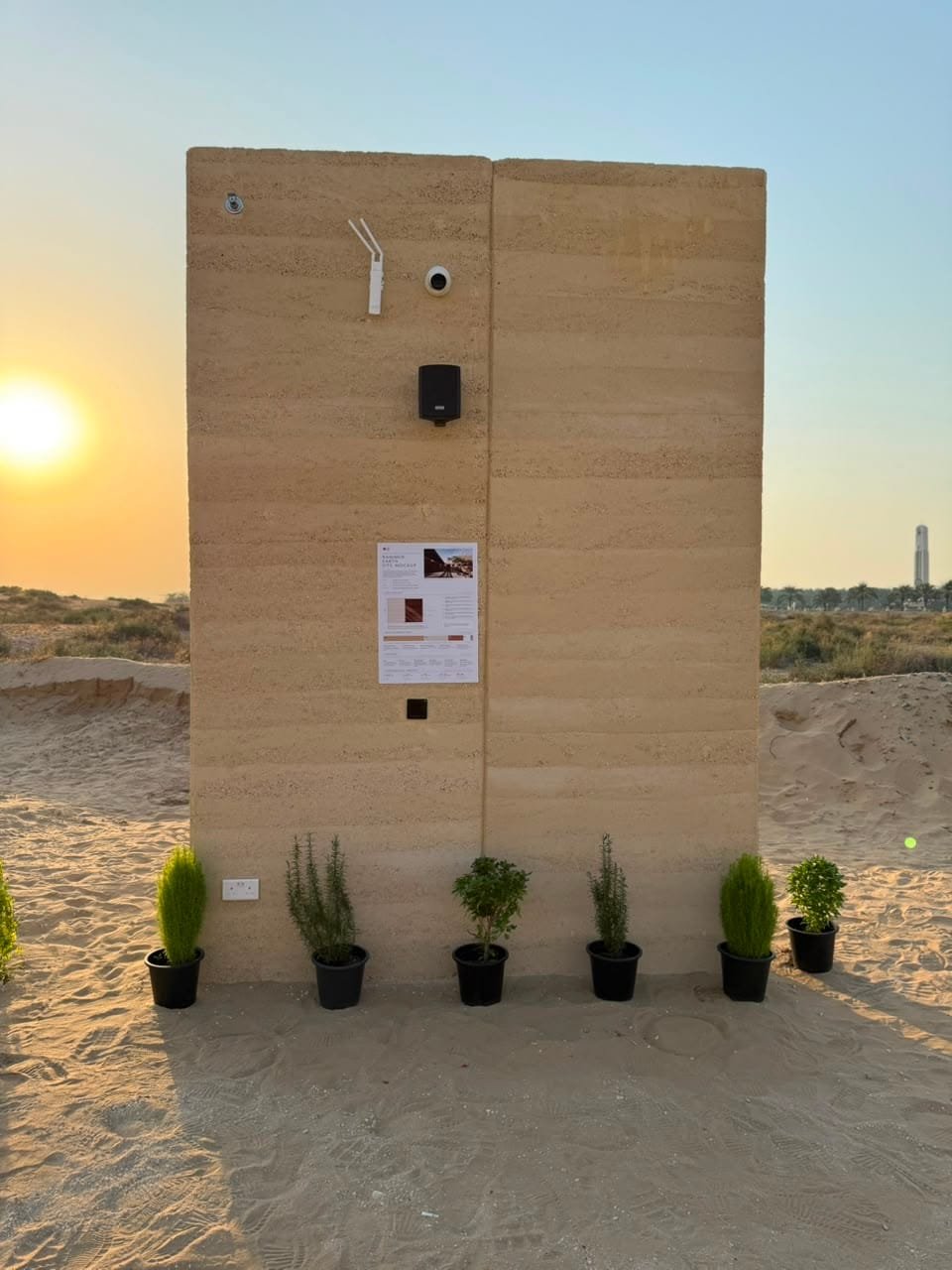
Rammed earth is moving from mood board to buildable line item on projects across the Emirates. Here is how to specify it at concept and tender stage so samples, mock-ups, engineering acceptance and procurement all line up. Read →Rammed earth advantages and disadvantages: an honest list
What compacted earth walls do genuinely well, where they are the wrong instrument, and the trade-offs worth knowing before the material reaches a specification. Read →Rammed earth and clay in Al Ain: building in earth today
Al Ain holds the most protected earth architecture in the country — mudbrick structures inside a UNESCO World Heritage property, in oases still watered by aflaj. Modern rammed earth is a different technique from the same family. Here is how the two relate, and what an engineered earth wall asks for now. Read →What drives rammed earth cost in the UAE
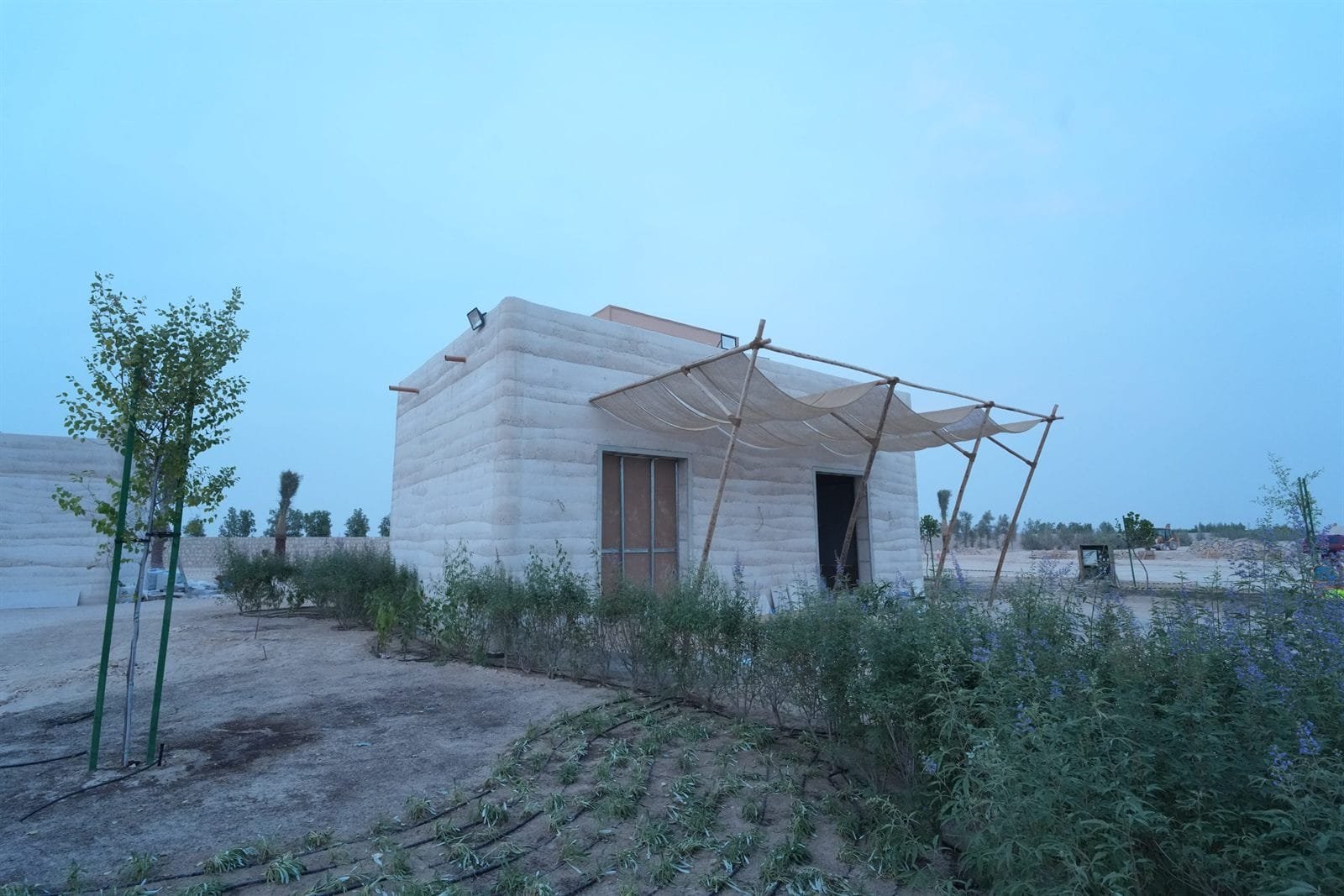
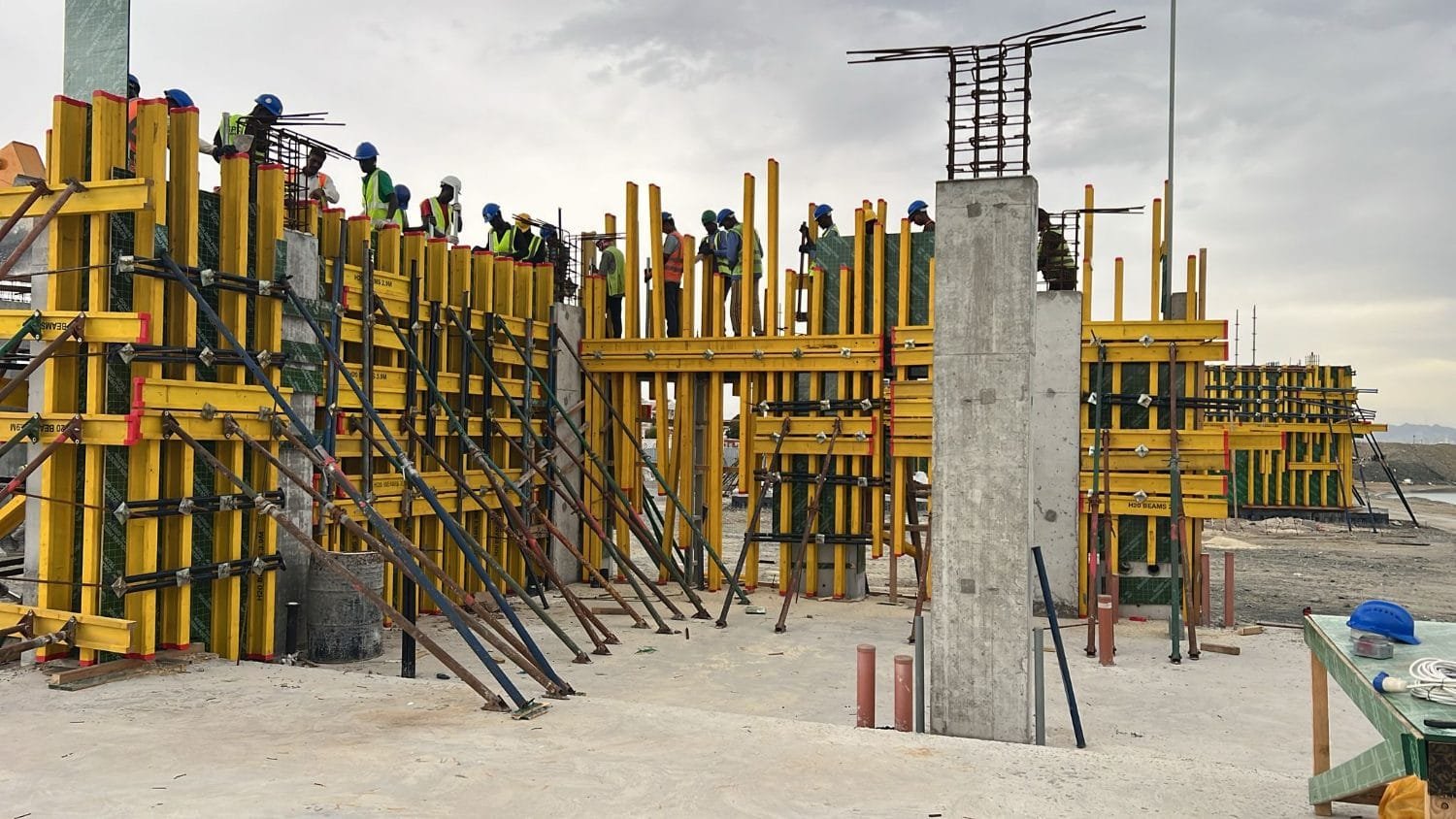
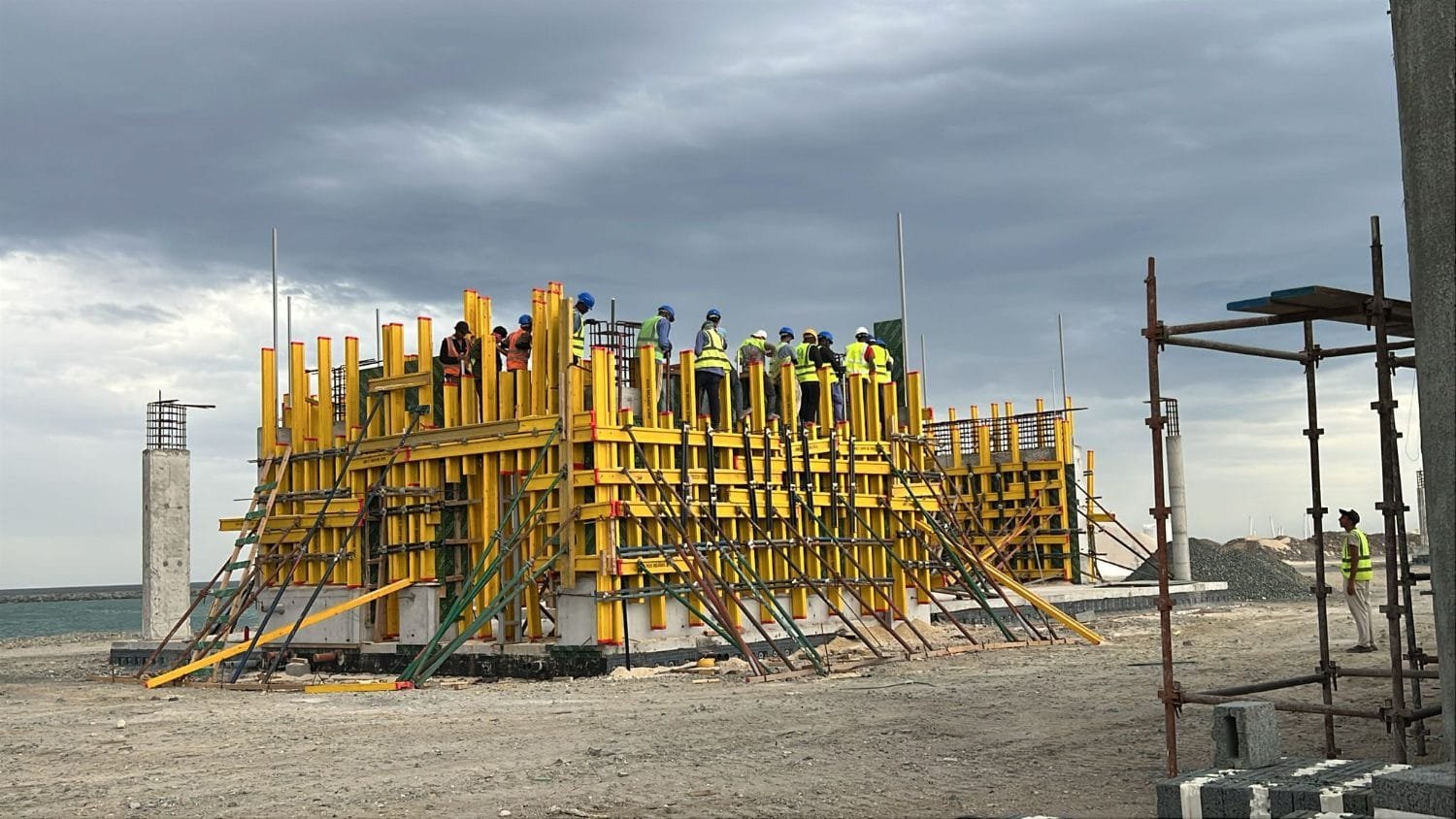
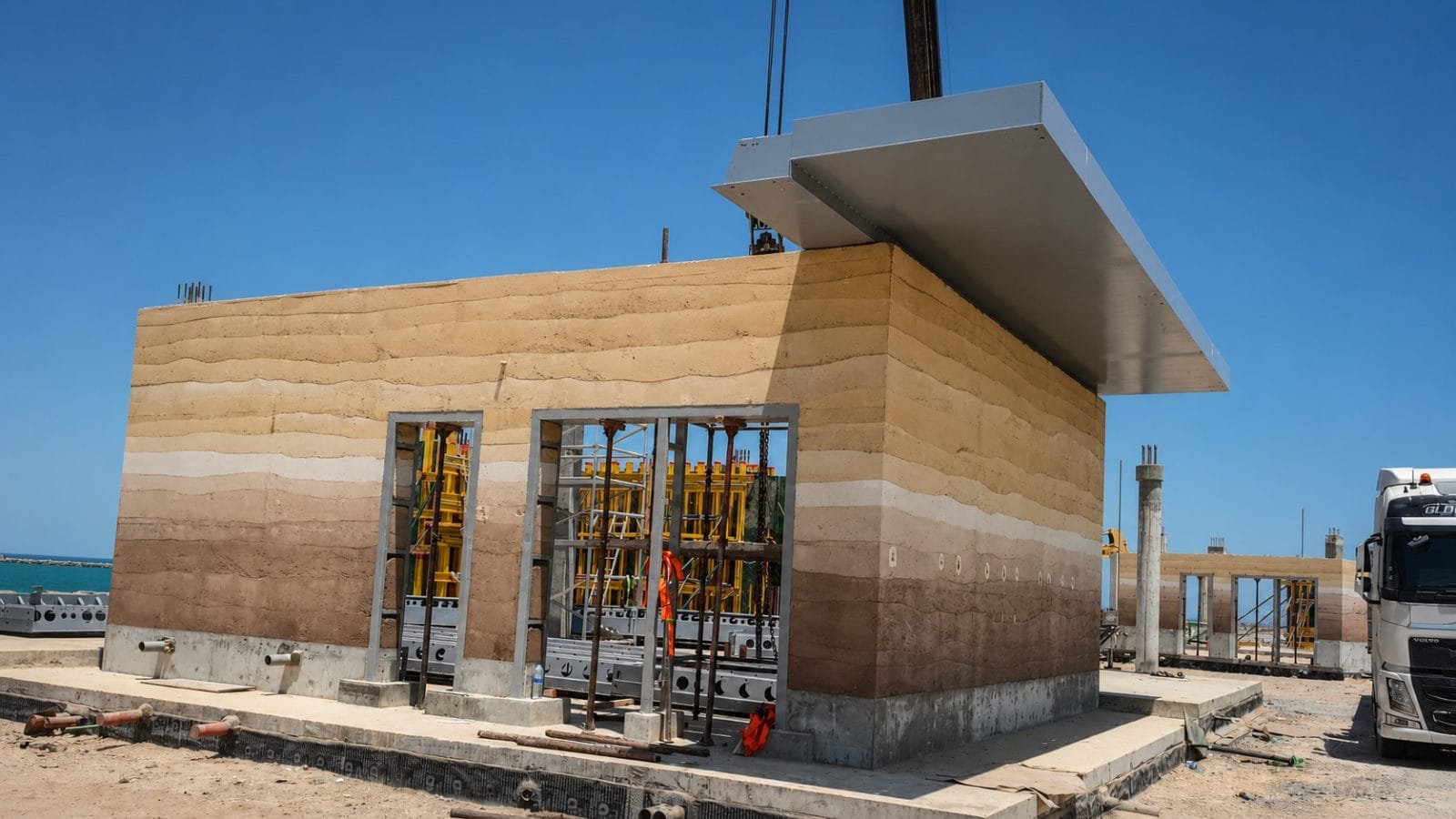
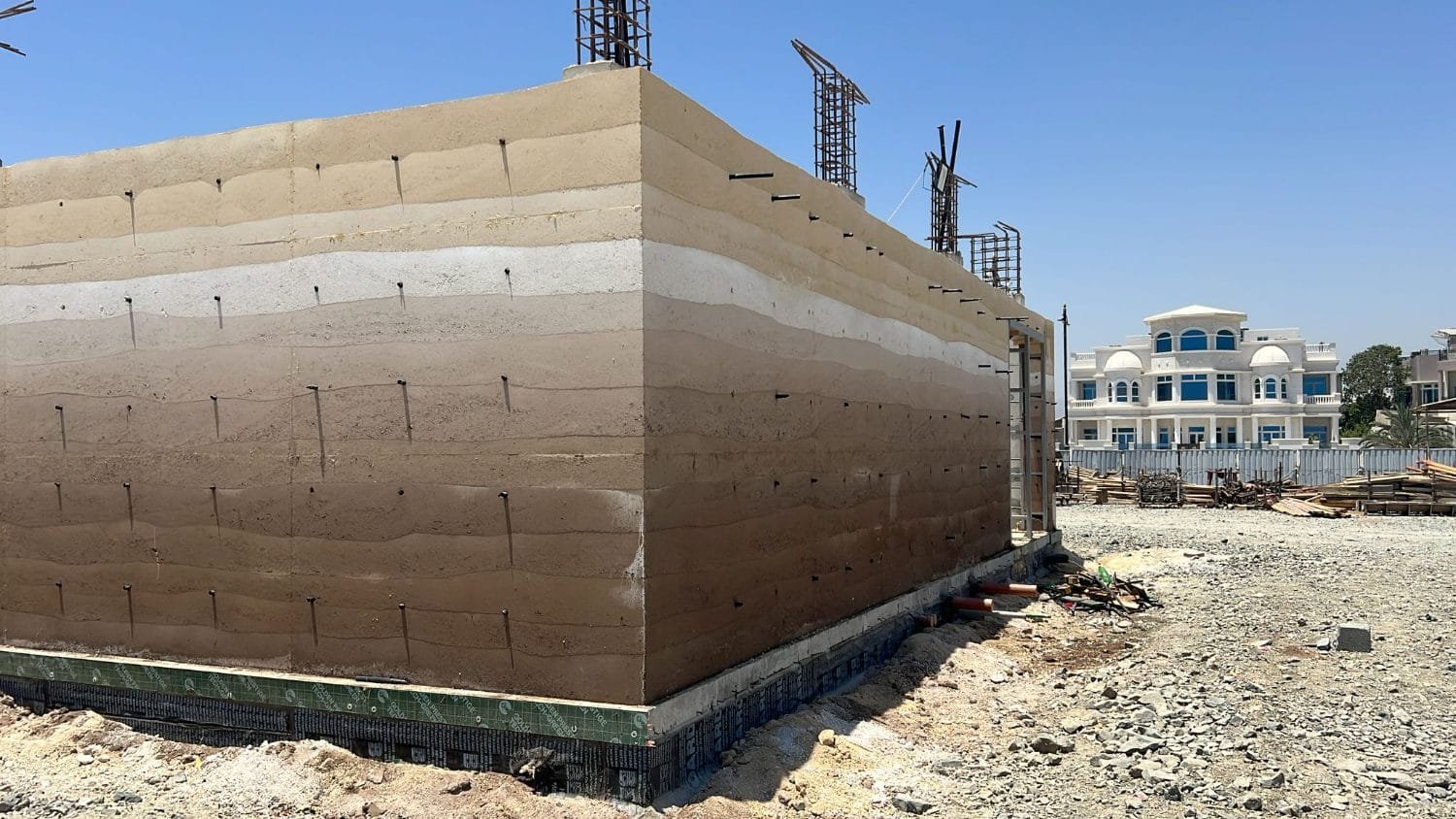
Rammed earth is priced by what it takes to build — formwork, lifts, labour and testing — not by the soil itself. Here is what actually shapes a rammed earth budget in the UAE, and when a plaster finish is the smarter route. Read →Rammed earth in Dubai: how in-situ walls are built in the UAE
Rammed earth has moved from reference image to live specification across the Gulf. Here is how in-situ rammed earth walls are actually built — the formwork, the lifts, the testing — and why the method belongs in the UAE. Read →How long do rammed earth walls last?
Earth walls have stood for centuries, and the material itself does not really wear out. What decides the lifespan of a rammed earth wall is water — where it lands, where it sits and where it leaves — and that is a detailing question, not a materials one. Read →Does rammed earth work in a hot climate?
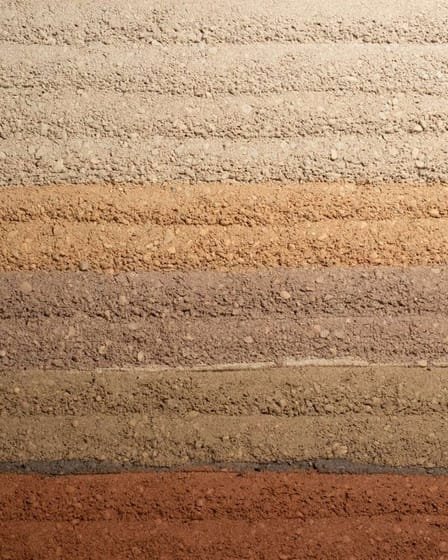
Dry heat is an advantage for a material that gains strength by drying, and a discipline for everything else. What actually changes on a Gulf rammed earth site, from mix trials to formwork cycles. Read →Rammed earth feature walls: how to get the strata look inside
Two very different routes lead to the same interior. One is a compacted earth wall built in place; the other is a 7-10 mm clay plaster. Knowing which you are specifying decides your programme, your budget and your structure. Read →Rammed earth durability in the Gulf climate: how walls age and what maintenance involves
Rammed earth has served hot, arid climates for centuries, and it is well suited to the Gulf — but owners and FM teams deserve straight answers about how it weathers. Here is what to expect, what to plan for, and where a plaster finish is the smarter route. Read →Rammed earth in Sharjah: building in-situ walls on the emirate's coast
Sharjah holds land on both the Arabian Gulf and the Gulf of Oman, and our rammed earth walls in the emirate stand on the eastern shore. Here is what building at Kalba Beach settled about mix, mock-ups, acceptance testing and detailing an earth wall within sight of the sea. Read →Rammed earth structural guide: lifts, formwork and testing to 8 MPa
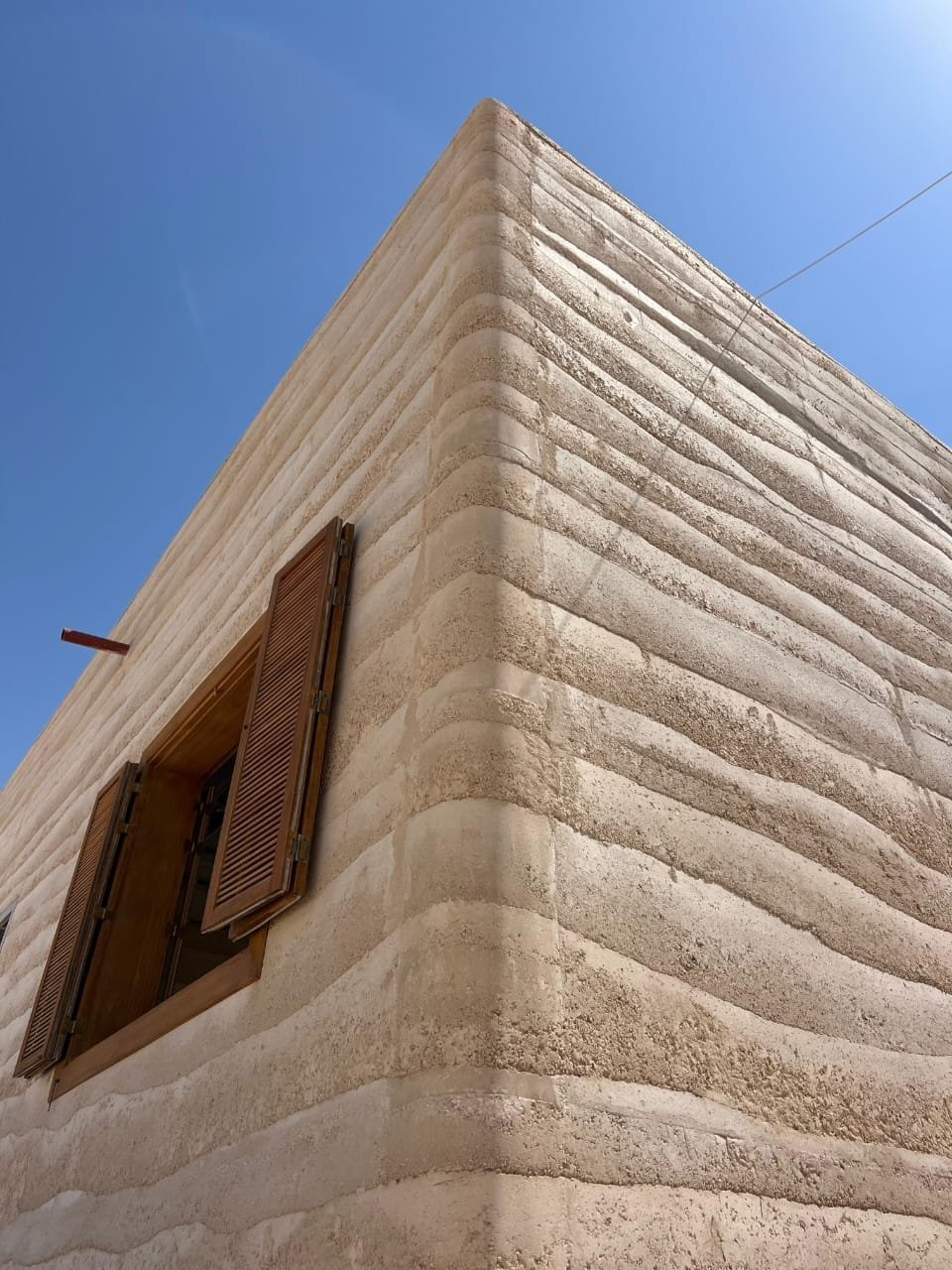
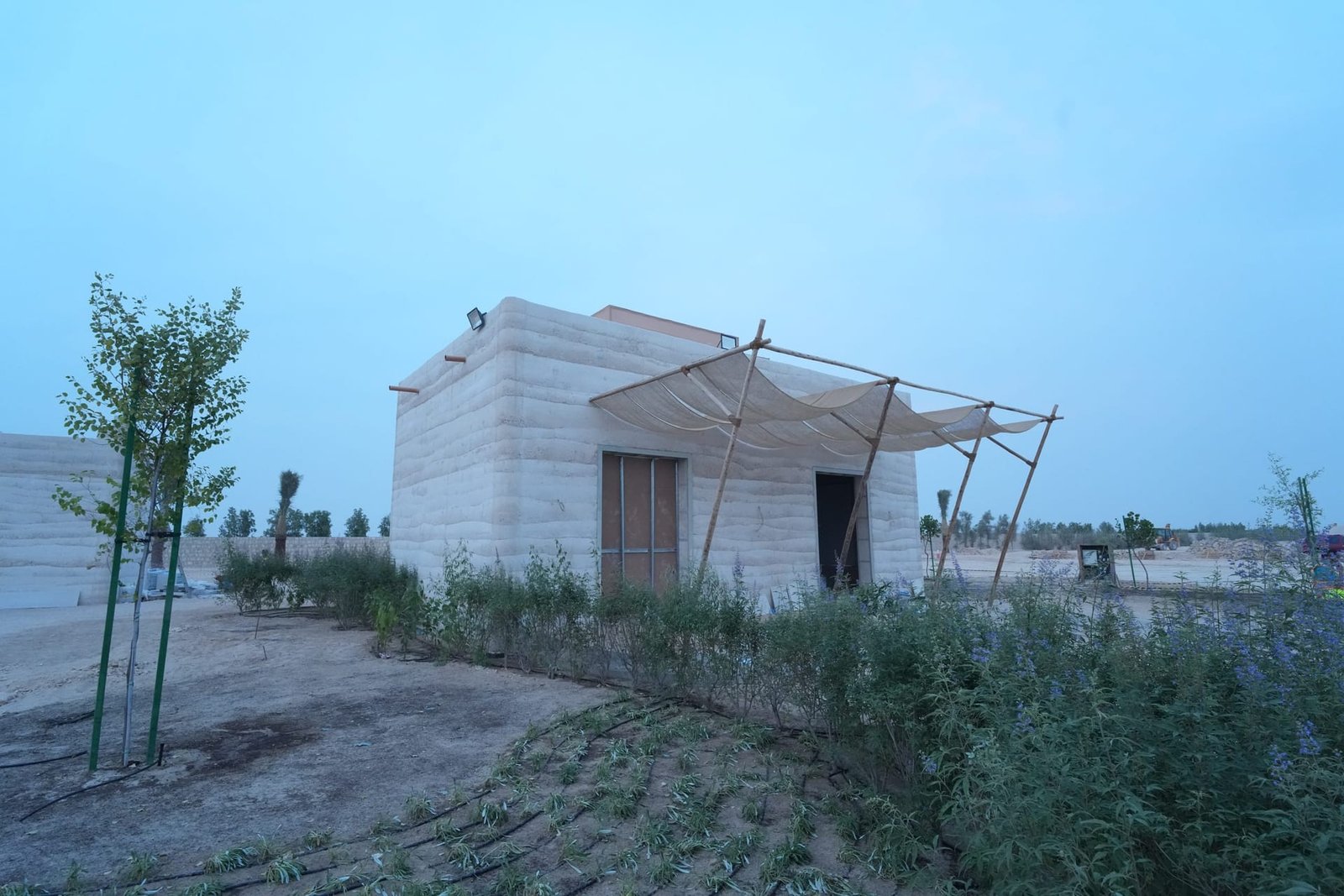
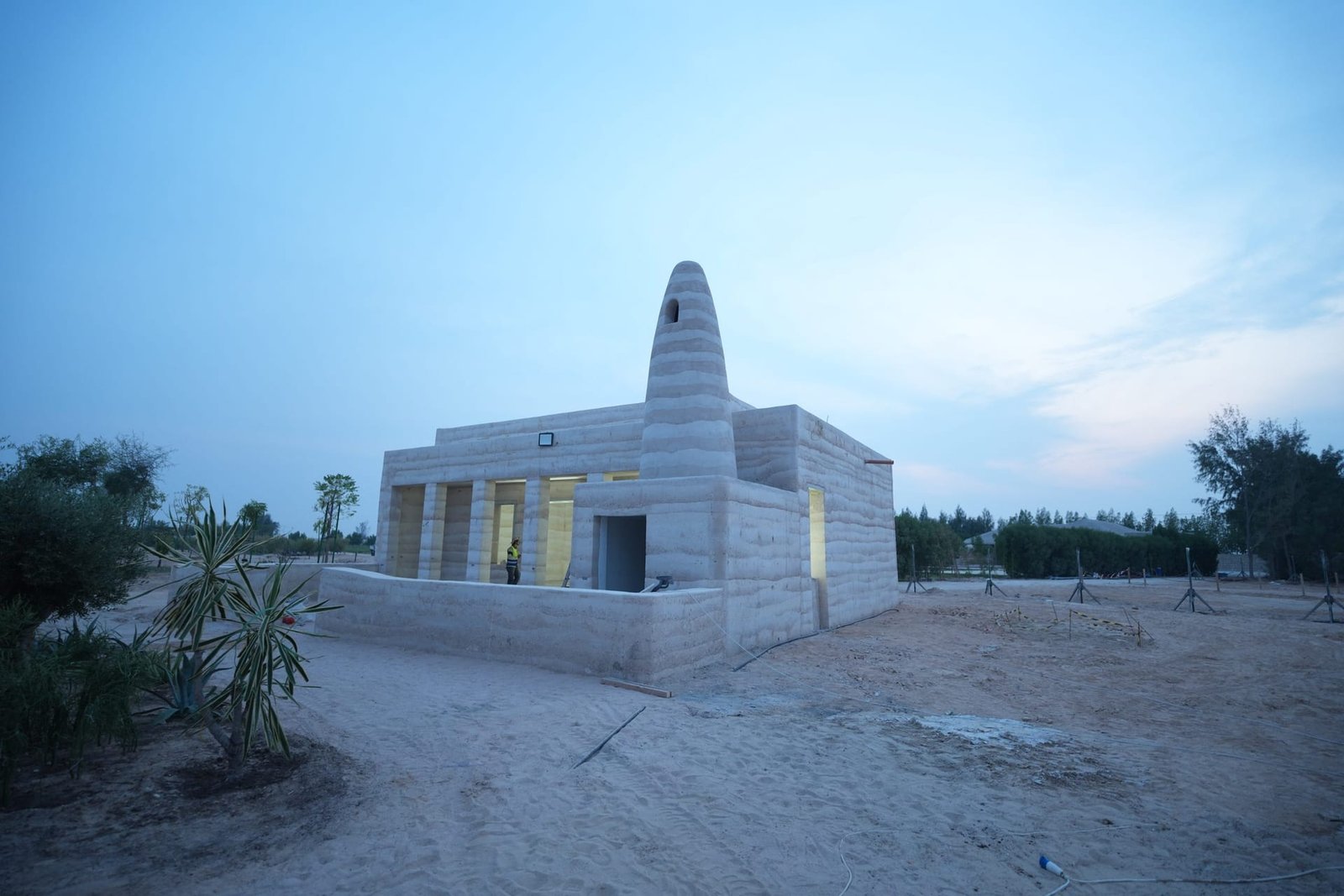
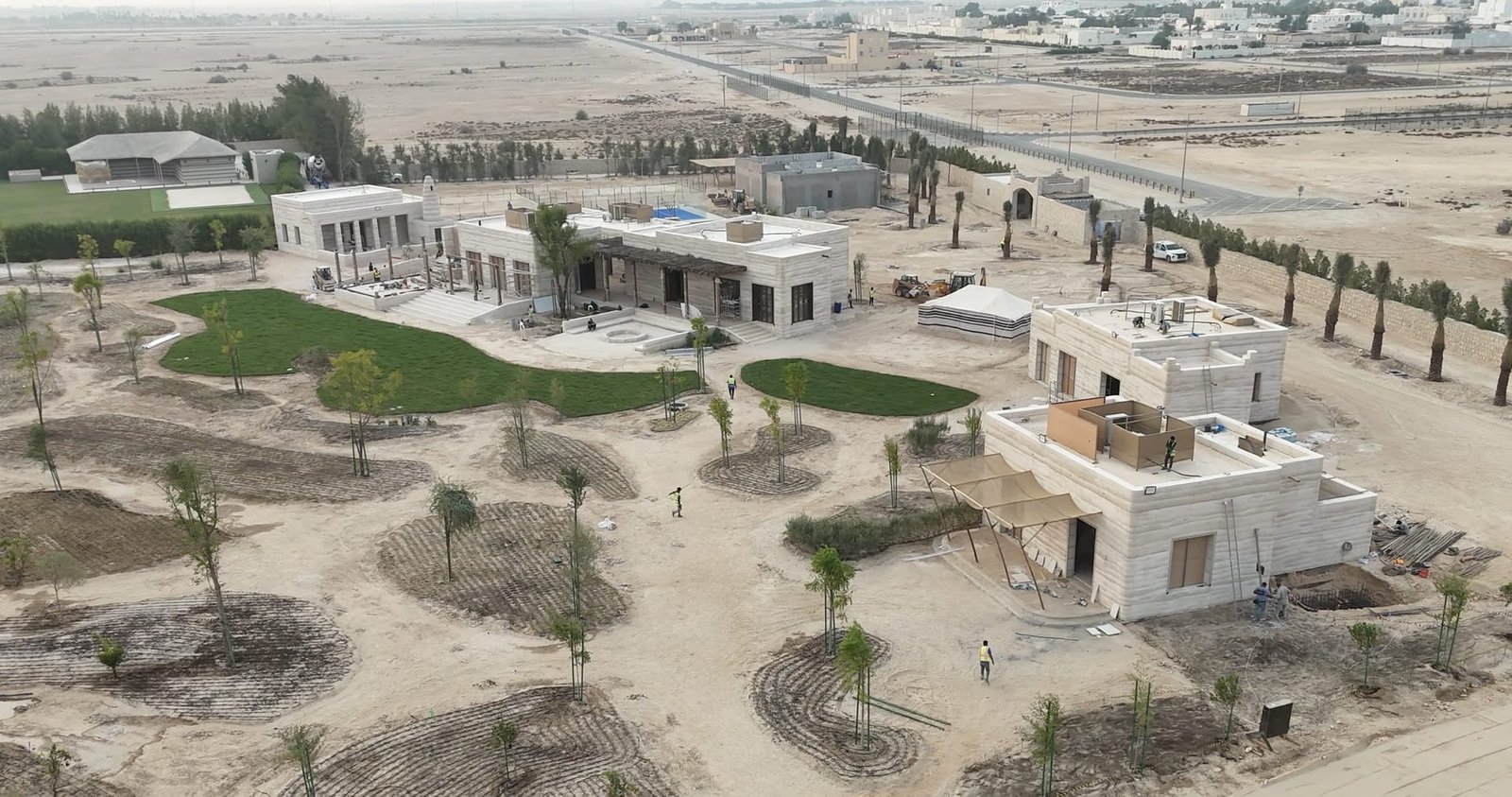
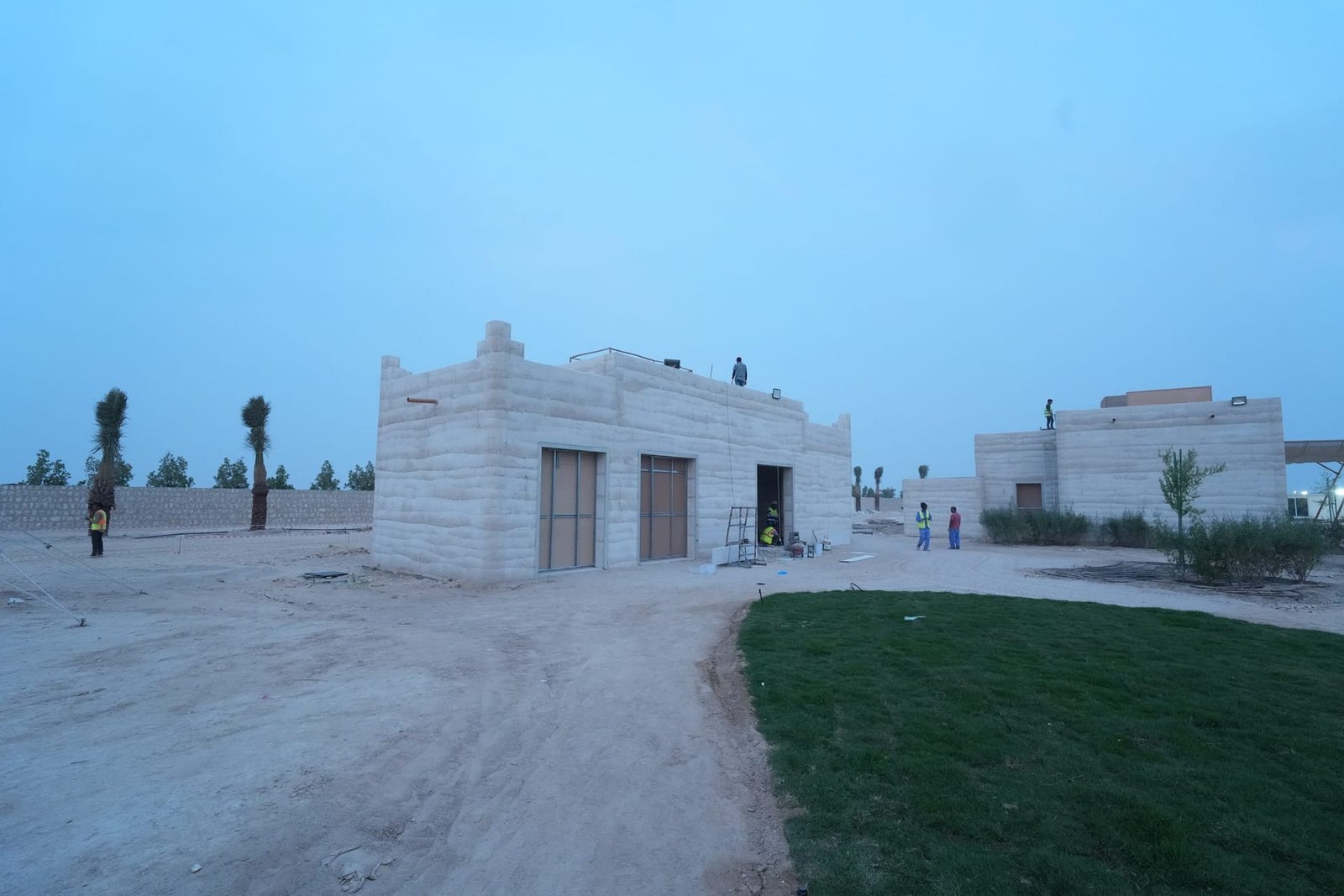
How an in-situ rammed earth wall is engineered, built and verified — from formwork and lifts to acceptance testing referencing New Zealand's earth building standards, with Al Kaaban Resort in Qatar as the built example. Read →Is rammed earth sustainable? A straight answer on carbon, waste and scorecards
Rammed earth has a strong sustainability case, but it is not automatic. Sourcing, cement content and detailing decide the number, and "contributes to" is the honest verb where WELL, LEED and Mostadam are concerned. Read →Rammed earth thermal performance: thermal mass, time lag and cooling loads
Earth walls are heavy, slow and good at flattening peaks. What that does and does not do for cooling loads in the Gulf, and where insulated double-skin rammed earth comes in. Read →Rammed earth vs concrete: how do they really compare?
Both are monolithic mineral walls cast against formwork. The binder is what separates them — and that single difference drives appearance, thickness, programme, repair and carbon. A straight comparison for architects and contractors in the UAE. Read →Rammed earth vs rammed earth plaster: when to build the wall and when to specify the finish
A structural rammed earth wall and the Clayworks Rammed Earth Finish share the same layered strata, but they sit at opposite ends of cost, programme and engineering. Here is how we help UAE teams decide between them. Read →How thick should a rammed earth wall be?
Wall thickness is not a style decision. It falls out of the load path, the thermal performance you are chasing, the formwork you can practically build and the openings you want to cut. Here is how those four resolve. Read →Stabilised vs unstabilised rammed earth: what is the difference?
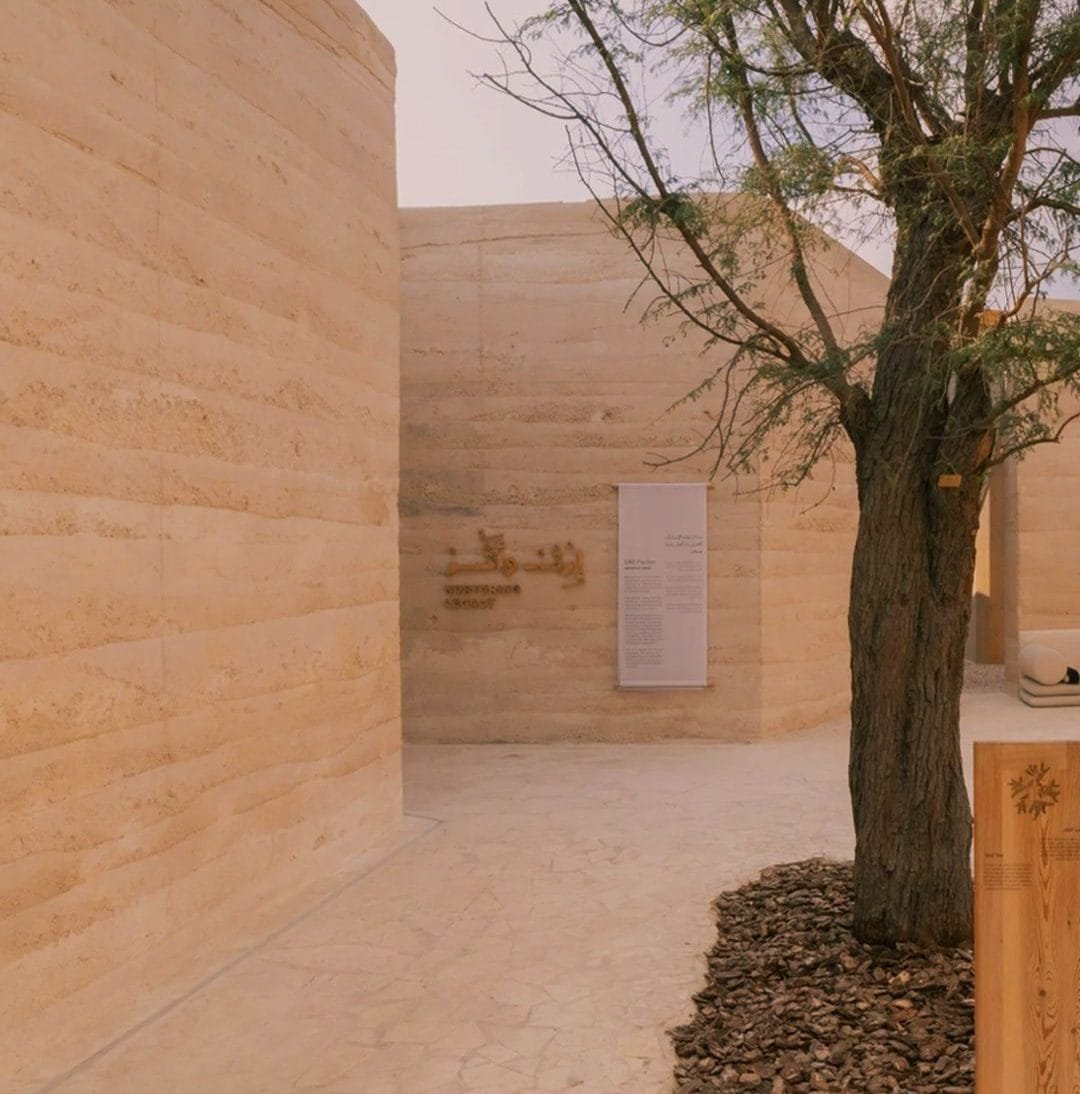
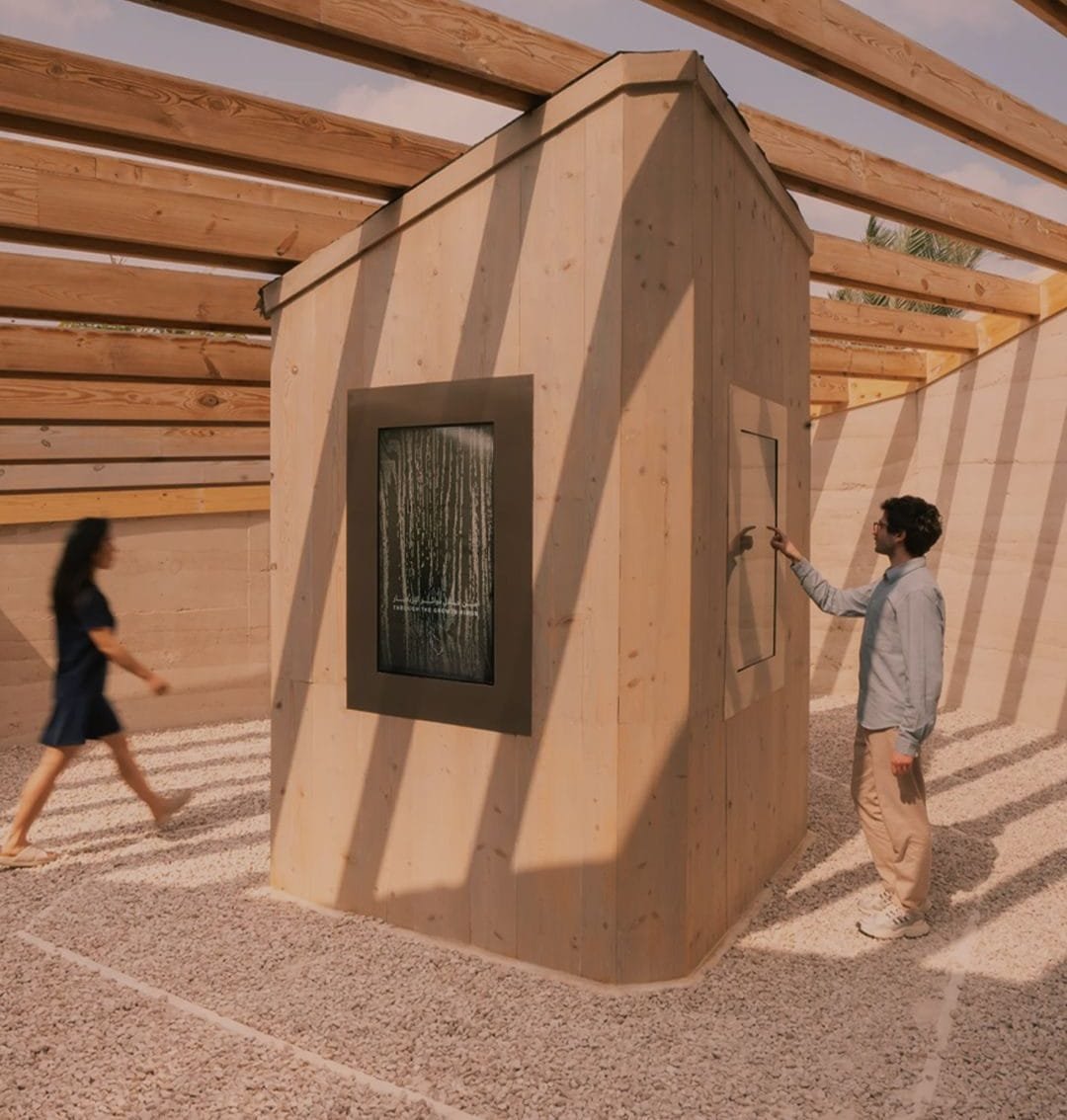
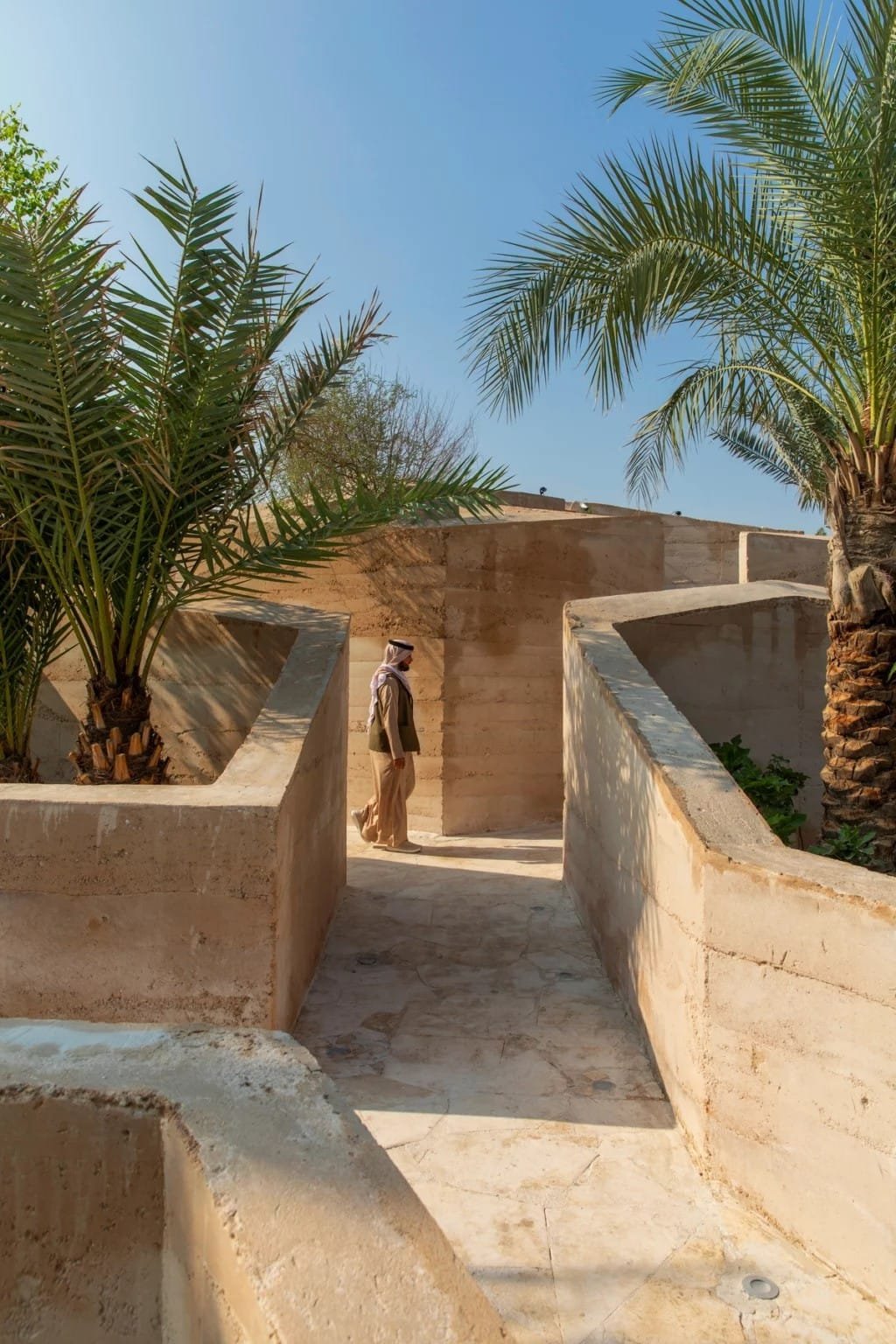
Almost every contemporary rammed earth facade you see is stabilised. Here is what stabilisation does to the wall, what you give up in return, and when an unstabilised mix is still the right call. Read →UAE Pavilion at Expo 2023 Doha: rammed earth at civic scale
Our own crews built the UAE Pavilion at Expo 2023 Doha as a complete pavilion in in-situ rammed earth, and the project took the Gold Award for Best Self-Built Pavilion. Here is what it demonstrates about earth construction at civic scale in the Gulf. Read →What is rammed earth?
A wall made by compacting damp earth in layers between formwork. No render, no paint, no cladding — the material is the finish. Here is how it is made, what goes into it, and where it is being built in the UAE and the wider Gulf. Read →Clay plaster
The clay plaster page →Clay plaster in Abu Dhabi: specifying it against Estidama Pearl
Every new building in Abu Dhabi is rated before it is built. Here is how clay plaster fits an Estidama Pearl submittal — the documents we hold for it, what each one proves, what it does not, and where the plaster belongs in the room. Read →Clay plaster in Al Ain, from the oasis mud coat to a modern wall
The oases of Al Ain hold mudbrick walls finished in mud plaster, inside the country's first UNESCO World Heritage property. A manufactured clay plaster belongs to the same material family and to almost none of the same method. This page is about that gap: what the two share, why a modern clay finish is not a conservation mortar, and what drier inland air and a wider day-to-night swing change about drying, substrate preparation, cracking and colour on an Al Ain villa. Read →Can clay plaster be used in bathrooms and kitchens?
Clay plaster is welcome in bathrooms and kitchens right up to the point where water hits the wall. Here is where that line falls, and what to specify beyond it. Read →How do you clean and repair clay plaster?
Clay plaster is cleaned dry and repaired in the same material it was made from. Here is the method we hand over with every wall we install, written for owners, hotel housekeeping and facilities teams in the UAE. Read →Clay plaster for Dubai homes and villas
Clay plaster gives Dubai interiors a surface that quietly manages moisture and adds nothing to the air. Here is how the Clayworks range works, where it belongs, and the villa that proves it. Read →Is clay plaster durable? Scratches, knocks and cracking, honestly
Clay plaster is a mineral surface, not a coating. Here is what actually marks it, what makes it crack, and how it ages in real homes and working venues. Read →Does clay plaster regulate humidity?
Clay is hygroscopic, so a clay-plastered room breathes with the air in it. Here is how the mechanism actually works, what it can and cannot do, and how it behaves in a Gulf interior that is air-conditioned most of the year. Read →What can clay plaster be applied to? Substrates, primers and preparation
Clay plaster is a thin finish that inherits everything the wall behind it does. Here is what it can be applied to, what each substrate needs first, and the site conditions that decide whether the finish holds. Read →Clay plaster vs lime plaster: which belongs in which room?
Clay and lime are both mineral plasters, but they set by completely different means — and that single difference decides which rooms each one belongs in. Read →Clay plaster vs paint and gypsum: how do they really compare?
One is a film of colour on a board. The other is the surface itself. A plain comparison of depth of colour, texture, air quality and lifecycle, including the cases where paint is still the right specification. Read →Clayworks in the UAE: sole distributor and approved applicator for the Middle East
Earth Layers is Clayworks' sole authorised distributor and approved applicator across the Middle East — which means the clay plaster on your drawings and the artisans who apply it come from one company, under one contract. Read →Al Sa'fat and your finishes schedule: green building compliance in Dubai
Every building in Dubai has to reach Silver Sa'fa. Two parts of the system reach into a finishes schedule — what a surface emits, and where its material came from — and only one of the finishes we install can satisfy the second. Read →What Estidama Pearl asks of a finishes schedule, and which documents answer it
A Pearl rating is decided from documents, and the finishes schedule is one of the documents that has to answer for it. This article sets out what Estidama asks of a wall, floor or ceiling finish; what an Abu Dhabi submittal contains; how a reviewer reads an Environmental Product Declaration, a Health Product Declaration and an emission test report differently; and what to do with one that has lapsed. Read →Choosing natural finishes for an Al Ain villa, room by room
Four material families cover an Al Ain villa, and almost every specification problem is a surface put in the wrong one. This is the sorting logic: what belongs on living walls and in the majlis, what belongs in wet rooms, what belongs on floors and along corridors, what belongs on a courtyard wall outside, and exactly where each material stops. Nothing of ours has been built in Al Ain to date, so what follows is method and material behaviour rather than a portfolio. Read →What is clay plaster, and why do designers specify it?
Clay, graded sand and mineral pigment, applied by hand. A short guide to what clay plaster actually is, the finishes it comes in, the places it must not go, and the reasons it keeps appearing on UAE finishes schedules. Read →Lime plaster & tadelakt
The lime plaster & tadelakt page →Is tadelakt waterproof? What burnishing and soap really do
Tadelakt sheds water rather than blocking it. Understanding that difference is what keeps a tadelakt shower looking right in year five. Read →Lime plaster and Microtadelakt in Abu Dhabi: specifying a mineral finish on a Pearl-rated job
Abu Dhabi rates a building before it is built, so a wall finish either arrives at the meeting with a document set or it does not arrive at all. This is what lime plaster and Microtadelakt bring to that table: the EN classes behind them, why a seamless mineral coat suits arches and soffits, what a coastal city does to a render, and how one crew and one approved panel are held across a package big enough to lose them. Read →How long does lime plaster take to cure?
Lime plaster sets in hours and carbonates for months. Knowing the difference is what keeps a programme honest, and what stops a good finish being spoiled in week two. Read →Lime plaster in Dubai: a three-millimetre mineral finish, and what it cannot do
Lime plaster arrives on Dubai drawings as one word covering several different things: a Moroccan hand technique, a manufactured polished system, and a sealer specification that decides whether either survives a bathroom. This is what a mineral lime finish actually is at one to three millimetres, where it belongs in a Dubai project, and the parts of the programme it will not let you skip. Read →Does lime plaster resist mould? The chemistry, and where it actually helps
Lime's resistance to mould is chemistry rather than marketing. But the chemistry only does part of the job, and the rest is decided long before the plasterer arrives. Read →Lime plaster and tadelakt in the UAE: wet-area finishes done properly
Tile is not the only answer for a bathroom. Lime plaster and tadelakt give wet areas across the UAE a seamless, grout-free surface that has handled water for centuries — provided the right material goes in the right zone. Read →Lime plaster vs cement render: which one should you specify?
Two mineral coatings, two entirely different chemistries. One dries the wall out, moves with it and can be patched. The other is harder, stiffer and far less forgiving of a mistake made behind it. Read →Polished plaster vs tadelakt vs microcement: what is the actual difference?
Three smooth, seamless finishes that get specified interchangeably and should not be: what each one is made of, where it performs, and how to pick between them on a UAE project. Read →Tadelakt maintenance: how to clean and care for a burnished lime bathroom
Tadelakt is maintained, not sealed. The routine is short, the list of things that damage it is specific, and both are worth knowing before the first shower is ever run. Read →What is tadelakt? The Moroccan lime plaster, explained
Tadelakt is the lime plaster of Marrakech: compressed with a stone and sealed with olive soap. Here is how it is made, why it sheds water, and where it earns its place in a UAE bathroom. Read →Microcement
The microcement page →Microcement in Abu Dhabi: pools, terraces and coating what is already down
Microcement reaches most Abu Dhabi projects as a fit-out material: one to three millimetres of coating over a floor somebody else installed, in a building whose sustainability rating was fixed long before the finishes were chosen. This is which system belongs in a pool, what a coastal terrace does to the working window, what the submittal can honestly carry, and why the cheapest way to buy it is usually the most expensive. Read →Microcement in Dubai: the substrate decides everything above it
Most microcement in Dubai is a renovation — one to three millimetres laid over tile, marble or screed that is staying exactly where it is. That makes the survey of what is already on the floor the most important part of the job, because a coating this thin inherits every fault beneath it. Here is what we look for, what we refuse, what gets designed rather than improvised, and what to put on the mock-up before anyone agrees a colour. Read →Acoustic plaster
The acoustic plaster page →
Resin bound aggregate
The resin bound aggregate page →How long does resin bound aggregate last in the UAE?
UV, surface heat, blown sand and daily traffic are the four things a resin bound surface has to live with in the Gulf. Three of them are settled at specification stage. One is handled with a brush. Read →Is resin bound aggregate permeable, and how does the water get away?
Permeability is the reason resin bound paving turns up in landscape and public realm specifications. It is also the property most often assumed rather than designed for. Read →Resin bound vs resin bonded: what is the difference?
The two names differ by one letter and the systems differ by nearly everything that matters. One is mixed and trowelled, the other scattered onto adhesive. Here is what that changes on site. Read →What is resin bound aggregate?
A surfacing system rather than a coating: stone fully coated in resin, trowelled out on site, and permeable by design. How it works, and where it belongs on a Gulf project. Read →Still deciding?
Send us the finishes schedule, the drawings, or a photograph of a wall you liked. We will tell you which material actually belongs on it — and what it takes to build.