
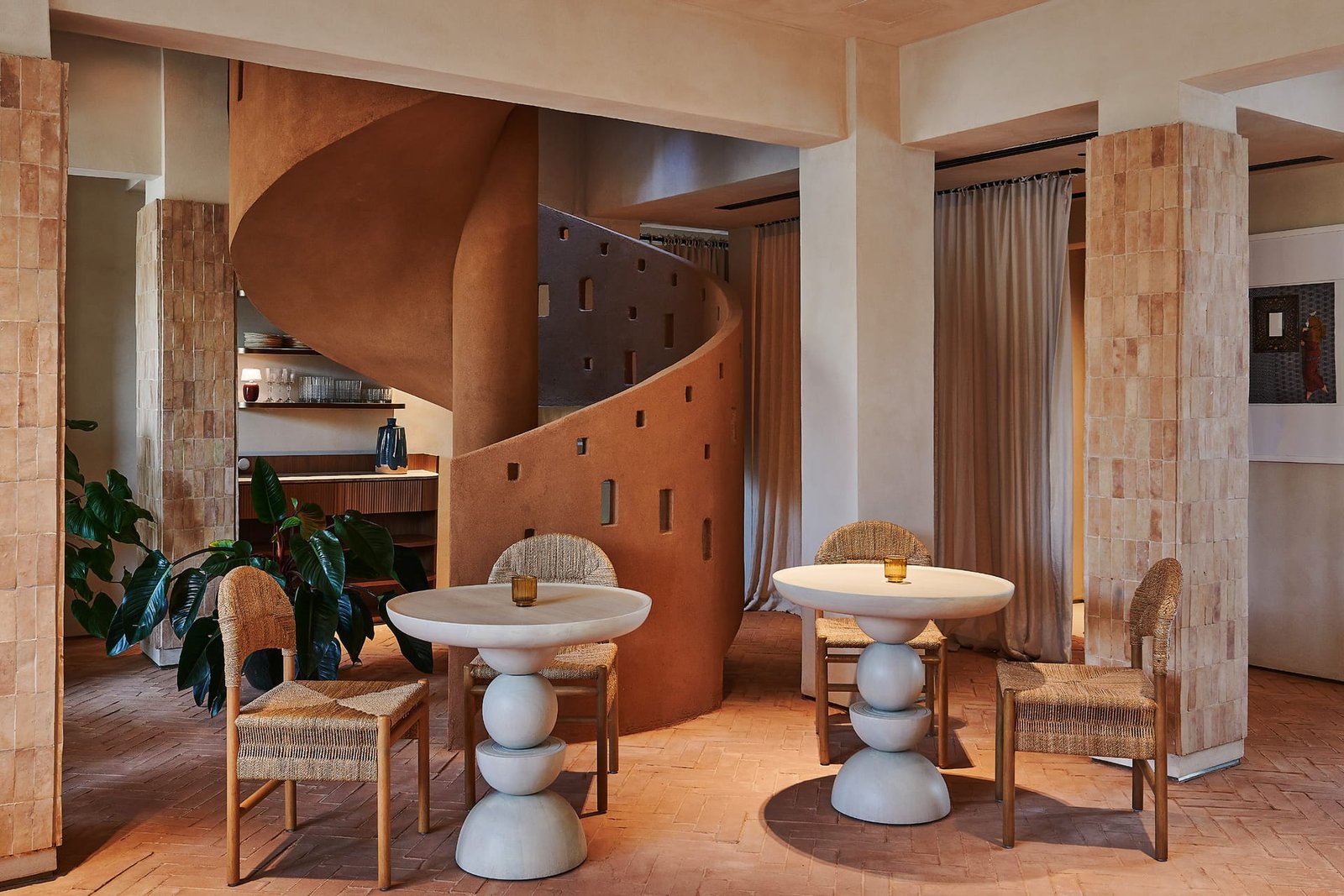
Clay plaster is durable but not hard. In normal living areas it takes daily contact well and rarely cracks, because it is applied as a thin coat over a sound, stable substrate. It will scratch under sharp impact — and unlike paint, scratches and knocks can be repaired locally rather than repainted wall to wall.
How durable is clay plaster in everyday use?
Clay plaster is durable the way a mineral surface is durable, not the way an epoxy is. Applied as a thin coat over a sound substrate, it absorbs the ordinary life of a room — furniture against a wall, a bag set down, hands on a corner — without the marking people tend to assume a natural finish will show.
What it is not is hard. A key dragged across it leaves a line. A chair back swung into an external corner can chip the arris. Clay is a mineral body held together by clay platelets rather than by a polymer film, and it behaves accordingly.
That trade is deliberate. The same softness that allows a scratch is what allows a repair, and repairability changes the durability conversation entirely.
Does clay plaster crack?
Clay plaster cracks for two reasons, and only one of them belongs to the plaster. Shrinkage cracking happens when a coat is applied too thick, dried too fast or mixed incorrectly. It shows as fine map cracking within days, and it is a workmanship issue rather than a material defect.
The second reason is movement in the background. Plasterboard joints that flex, blockwork still drying out, a substrate that was not primed or reinforced properly — the crack telegraphs through, because no plaster bridges a moving joint. This is why the substrate specification matters more than the finish specification, and clay plaster substrates sets out what we need before we start.
Applied at its intended build over a stable, prepared and reinforced background, clay plaster is not a cracking material. On UAE projects the two things we watch hardest are the drying rate in summer and the readiness of the background. Both are controlled on site, not corrected afterwards.
What do clay plaster scratches actually look like?
Most marks on a clay wall are not damage to the plaster at all. A rubber shoe sole, a metal chair leg, a trolley wheel — these leave material on the surface rather than removing it, and a dry sponge or a soft brush lifts much of it away.
A true scratch removes a little of the surface and shows as a slightly lighter line, because the body underneath is the same colour but less compacted. On a rustic or heavily textured finish that line disappears into the texture; on a smooth, burnished finish it reads more clearly.
This is why finish selection follows use rather than mood boards. A rustic texture in a busy corridor forgives far more than a smooth finish in the same position. There is a fuller method in clay plaster cleaning and repair.
What does clay plaster wear look like after a few years?
Clay ages by settling into itself. Colour deepens very slightly, and the sheen on a burnished finish evens out where hands pass. It does not chalk, yellow or peel, because there is no film on the surface to fail.
Wear concentrates exactly where you would expect: door reveals, around switch plates, the wall behind a dining chair, the corner where a corridor turns. Everywhere else stays much as it went on.
Painted plasterboard tends to look tired uniformly and then need a full repaint. Clay wears in patches, which means it can be treated in patches — a difference clay plaster vs paint works through in more detail.
Is clay plaster durable enough for hotels and restaurants?
In hospitality the honest answer is yes, in the right locations, and it needs specifying with care. Guest rooms, lobbies above hand height, restaurant walls, ceilings and feature walls all suit clay. Service corridors, trolley routes and back of house generally do not.
At Villa 515 in Dubai we installed Clayworks clay plaster in a custom Demi Rustic yellow through a restaurant interior designed by NON. Pairing a textured finish with a room in daily service is a deliberate choice — texture absorbs incidental contact that a flat surface would display.
The other operator argument is downtime. A damaged section of clay can be made good in place, rather than by repainting a whole elevation and closing the space while it dries.
Where clay plaster is the wrong choice
Floors, never. Direct-water zones, never — inside showers, behind taps, around basins. Those go to lime plaster or tadelakt, which harden chemically and handle water; clay plaster in bathrooms and kitchens sets out where the line falls.
It is also the wrong call for genuine impact zones: loading areas, plant rooms, low-level walls in a working commercial corridor, anywhere a hard trolley meets a wall repeatedly. Specify a harder finish there and use clay where people actually live.
And it is the wrong call if the background is not ready. No plaster outperforms the wall it is stuck to.
How repairs work, and why they change the durability question
Because clay stays water-soluble, a repair is a genuine repair rather than a cover-up. The area is dampened, fresh material of the same specification is worked in, and the surface is re-textured or re-burnished to match. Done properly, the join reads as part of the wall.
Two things make that possible: a record of the exact finish and colour used, and applicators who know the finish. Our artisans are on our own payroll rather than subcontracted, so the crew that made the wall can be the crew that mends it.
For most homeowners it rarely reaches that stage. A soft brush and a dry sponge deal with the majority of everyday marks.
Specifying clay plaster that keeps looking right
Durability in clay plaster is decided before anyone opens a bag: the right finish for the room, a background that will not move, a realistic drying programme for a UAE summer, and applicators who have done it before. Get those four right and the wall behaves itself for years.
We supply and install Clayworks clay plaster across the UAE as their sole authorised distributor and approved applicator in the Middle East, and we can sample finishes against the actual light and traffic of your space.
Tell us the rooms, the traffic and the programme, and we will say plainly where clay belongs and where it does not. Send us the drawings, or message the team on WhatsApp +971 50 136 0506.