 EARTH LAYERS
Send your finishes schedule
EARTH LAYERS
Send your finishes schedule
The material
Cork is bark. It is stripped from the living tree every nine years without felling it, and the tree carries on. Ground to a 0.1 to 0.4 mm granule and carried in a water-based resin, it can be sprayed onto almost anything.
That matters most where insulation board cannot go. A roof with a hundred penetrations, a facade with mouldings and reveals, a parapet, a soffit, a curved wall — anywhere a rigid board would need cutting, fixing and then sealing at every edge. Ecork follows the shape and leaves one continuous surface behind it.
It is elastic, which is the second reason to use it. A sprayed cork layer takes small structural movement without opening the hairline cracks a rigid render would show, and it stays permeable to water vapour rather than trapping moisture behind itself.
Kilnher make it in Valencia and supply it in 25 standard colours, with RAL and NCS to order. On a Gulf roof the colour is not decoration — a light one reflects, and the surface it sits on is the one taking the sun all day.
Measured to EN 12667. Applied at the recommended 3 to 4 mm where thermal or acoustic performance is the point of the specification, rather than the 2 mm decorative build.
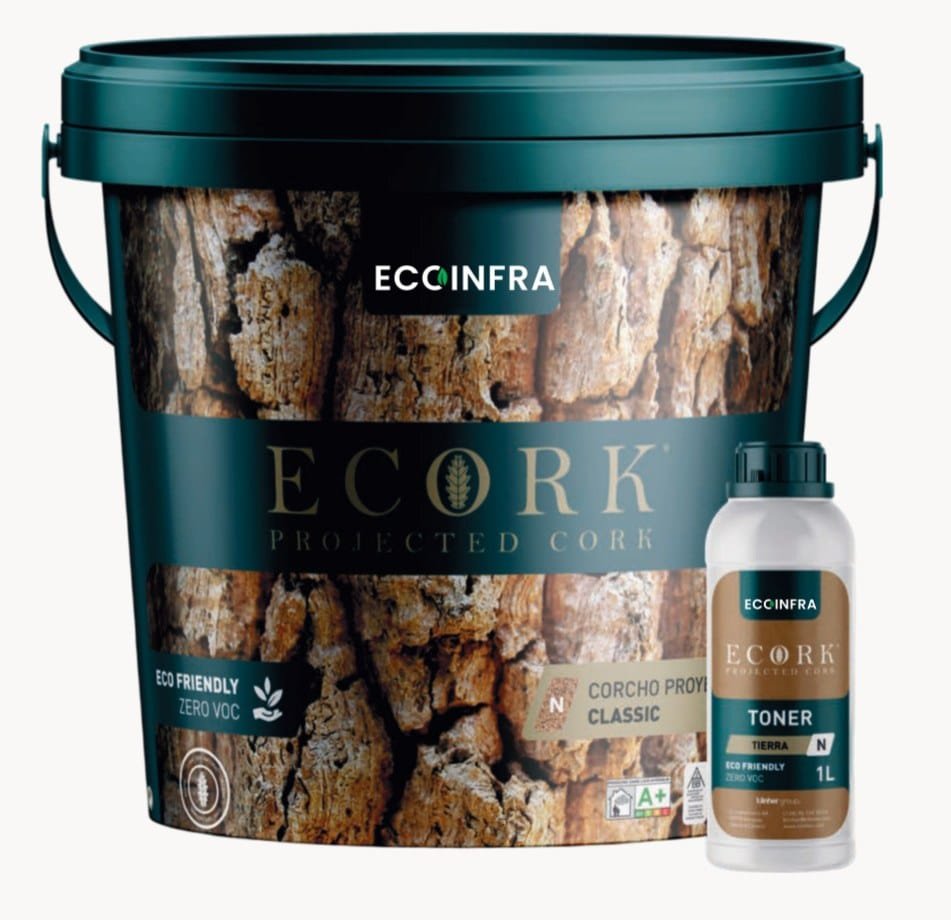
The highest band of the French indoor air emissions scale. The data sheet records a VOC emission figure of 25. We publish the class and the number rather than the word printed on the pail, which claims zero.
Water vapour permeability Class 1 to EN 1062-3. The layer breathes rather than sealing moisture into the substrate behind it — which is the whole argument for cork over a closed coating on an older wall.
The elasticity that lets it take structural movement is what keeps micro-cracks out of the finish. On a roof or a parapet that moves daily with the temperature, a rigid coating is the thing that fails first.
Tested to EN 1542. Sprayed at 40 to 60 cm with the substrate below 8 % moisture; very porous surfaces are primed with Primer Cork first.
Artificial weathering to UNE-EN-ISO 11507:2007. Relevant here: this is an exterior coating that spends its life in direct sun, and the ageing test is the only honest guide to how the colour holds.
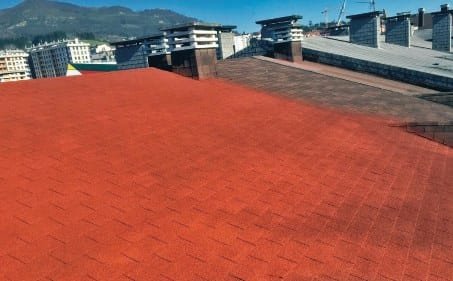
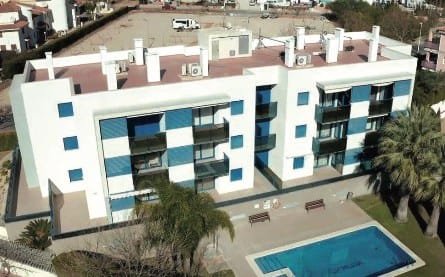
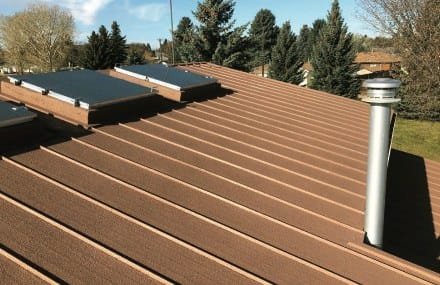
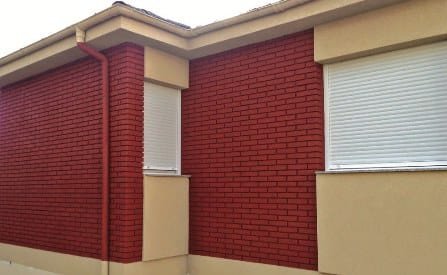
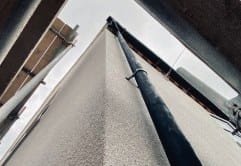
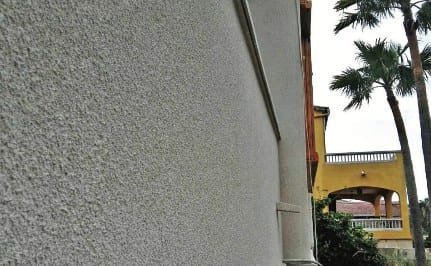
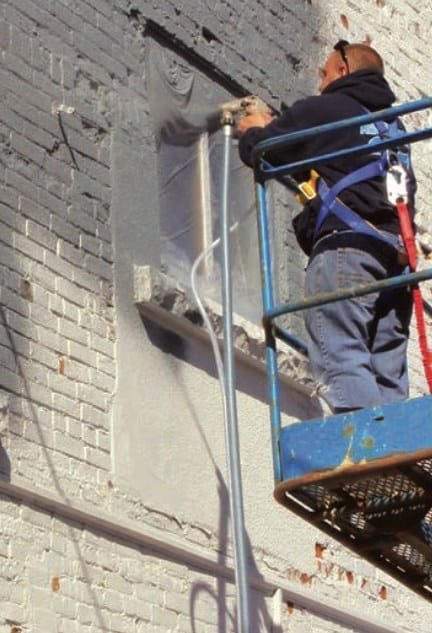
Ecork in place
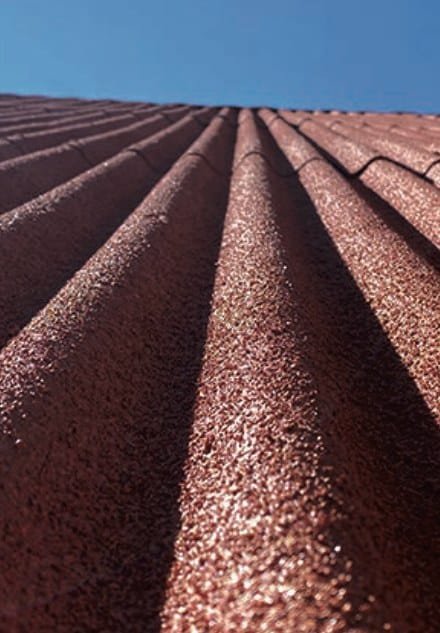
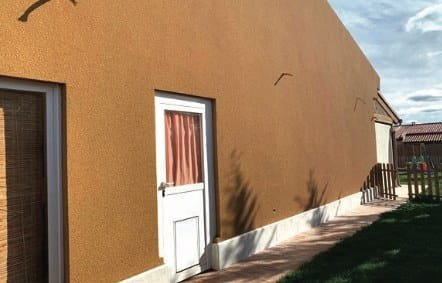
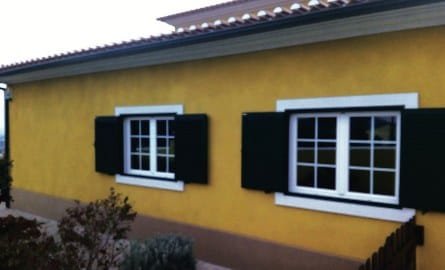
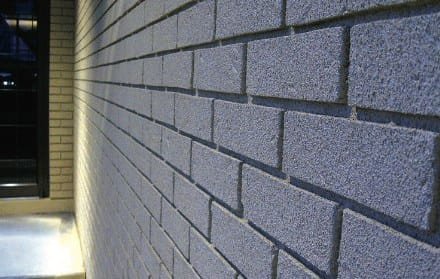
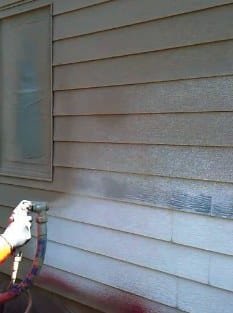
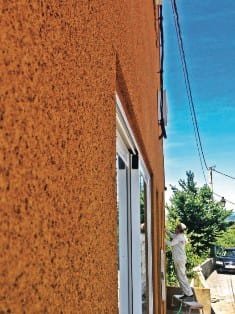
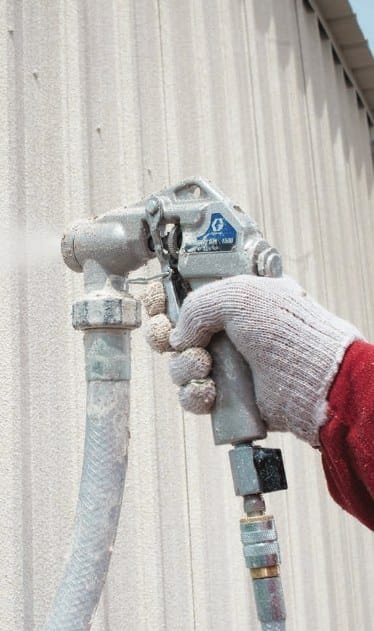
Sprayed cork on roofs, facades and walls — over masonry, render, brick, metal deck and painted timber. Manufacturer reference photography from Kilnher; these are not projects our crews delivered. Photography: Kilnher.
Where it is specified
Specify it
Projected cork: Ecork HD by Kilnher, water-based cork coating applied by spray at a dry film thickness of [2 / 3 / 4] mm in two or more coats, in colour [ref] to the approved sample panel, over a substrate below 8% moisture and primed with Primer Cork where porous. Thermal conductivity 0.0610 W/m·K to EN 12667; water vapour permeability Class 1 to EN 1062-3; adhesion to concrete 1.9 MPa to EN 1542; indoor air emissions Class A+. Applied between 5 and 50 °C at relative humidity below 80%. Supply and application by Earth Layers.
Square brackets mark the choices that belong to the project. Send us the finishes schedule and we will return the clause completed, with the sample and mock-up programme against it.
Questions specifiers ask
Short answers, restating what this page already sets out. The specification pages carry the data behind each one.
What is projected cork and how is it applied?
Projected cork is cork granules carried in a water-based resin and sprayed onto roofs, facades and walls, 2 to 4 mm thick in two or more coats. Earth Layers applies the Ecork HD system by Kilnher with a 5.5 mm spray gun at 40 to 60 cm, at 3.5 to 4.5 kg air pressure, over a firm substrate below 8% moisture; very porous surfaces are primed first.
Where can projected cork be used?
It is specified on roofs and terraces, including surfaces crowded with penetrations and upstands; on facades over render, masonry, concrete and previously painted surfaces; on parapets, soffits, reveals and mouldings a rigid board cannot follow; on older walls that must stay vapour permeable; on walls and ceilings needing thermal or acoustic improvement; and as a base beneath paving, ceramics and parquet. Substrates include masonry, render, brick, metal deck and painted timber.
How thick is a projected cork coating and does it insulate?
Applied thickness is 2 to 4 mm. Where thermal or acoustic performance is the point of the specification, 3 to 4 mm is recommended; 2 mm is the decorative build. Thermal conductivity is 0.0610 W/m·K measured to EN 12667. Because the coating is sprayed, it insulates surfaces rigid insulation board cannot follow — roofs crowded with penetrations, mouldings, reveals and curved walls — in one continuous surface.
Does sprayed cork crack or fade over time?
The coating is elastic, so a sprayed cork layer takes small structural movement without opening the hairline cracks a rigid render would show. On a roof or parapet that moves daily with the temperature, that elasticity is what keeps micro-cracks out of the finish. The product was aged 3,200 hours in artificial weathering to UNE-EN-ISO 11507:2007, and adhesion to concrete tests at 1.9 MPa to EN 1542.
Is projected cork breathable?
Yes. Projected cork has water vapour permeability Class 1 to EN 1062-3, so the layer breathes rather than sealing moisture into the substrate behind it. It stays permeable to water vapour instead of trapping moisture, which is the argument for cork over a closed coating on an older wall where the build-up must remain vapour permeable.
Technical support for the design team
We supply the material and we apply it, so the specification and the workmanship sit with one party. Send a finishes schedule, an elevation or a mood board and we will come back with the system, the build-up, the sample programme and a completed clause.