Tadelakt is a Moroccan lime plaster, applied in thin coats, compressed with a smooth stone while still green, then sealed with olive-oil soap. The soap reacts with free lime to form water-repellent compounds, so the surface sheds water, which is why it is used in hammams, bathrooms and wet rooms.
What is tadelakt?
Tadelakt is a lime plaster from Marrakech, traditionally used to line hammams, cisterns and riad bathrooms. The name comes from the Arabic verb for rubbing or kneading, which describes the process rather than the material, and that is the clue to what it really is.
The ingredient list is unremarkable: lime, water, aggregate, pigment. What sets tadelakt plaster apart is what happens to it after it is on the wall. It is compressed with a smooth stone while still green, then treated with olive-oil soap.
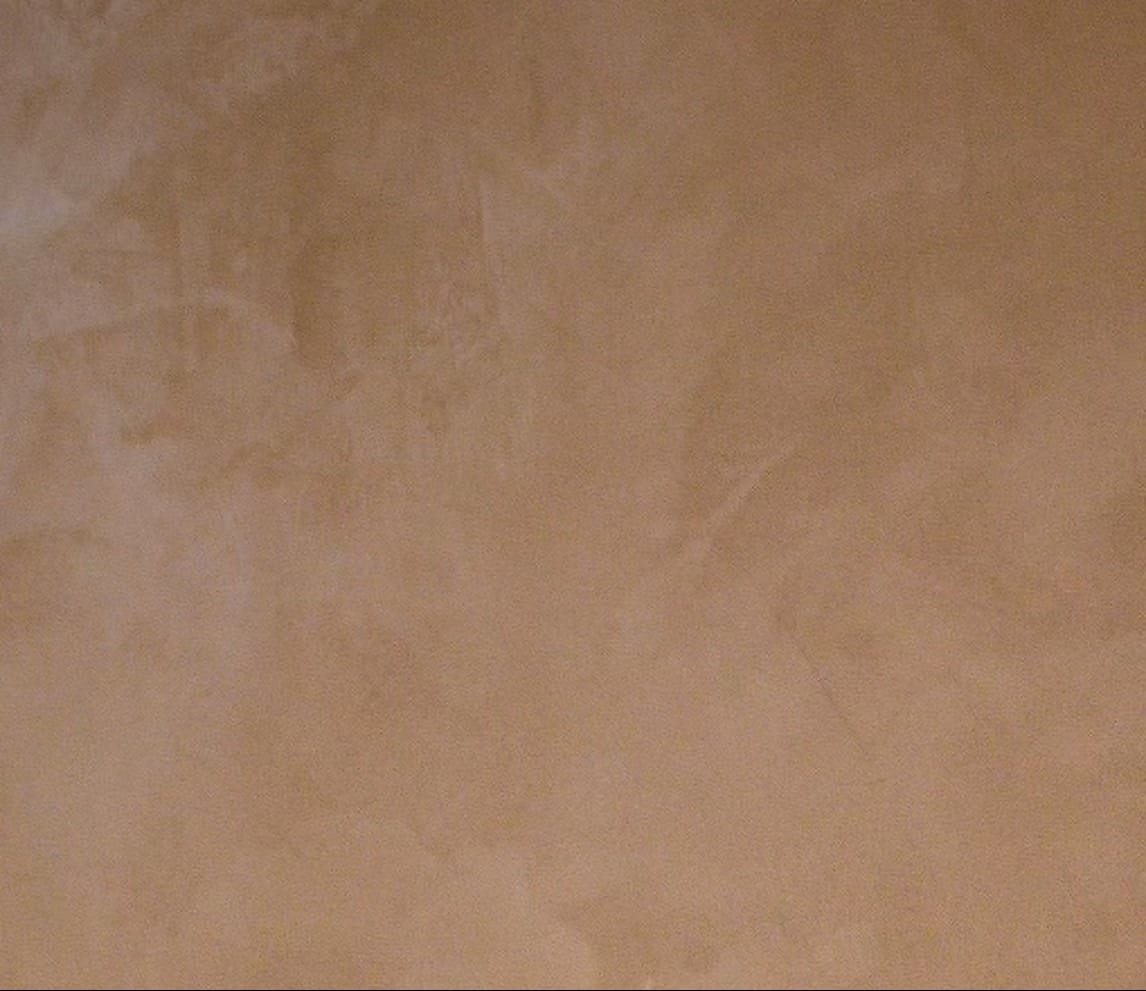
The result is a seamless surface with no joints and no grout lines, a soft sheen that comes from compression rather than a coating, and colour that moves gently across a wall. It reads as one continuous piece of material, which is precisely why designers ask for it.
How is tadelakt applied?
Tadelakt is built over a prepared, stable background, usually a lime or sand-cement render that is flat, cured and correctly keyed. It goes on in thin coats, each worked while the lime is still green.
Timing runs the whole job. There is a window in which the plaster is firm enough to compress but still soft enough to move. Too early and the surface tears, too late and it will not close. That window is why tadelakt is an artisan finish and cannot be rolled, sprayed or rushed.
It also coves into corners and around curves without a joint, which is why it suits sculpted forms, niches and curved walls. Our crews applied Cemher Microtadelakt to the curved display walls at Afraa Boutique, Place Vendôme Lusail.
Why does burnishing matter?
Burnishing is the act of compressing the green plaster with a smooth stone. It closes the surface porosity, aligns the fine particles and brings the finest material to the face, producing a dense skin that is physically different from the body of plaster underneath.
The sheen is a consequence of that compression, not a varnish. Nothing sits on top, so there is no film to peel, craze or wear off in patches. As the surface ages, it wears back into itself.
How hard and how long a surface is burnished sets the sheen level, which can be taken anywhere from a quiet matt to a low satin. That is worth agreeing on a sample panel rather than in words.
What does the olive soap actually do?
Lime plaster hardens by absorbing carbon dioxide from the air, turning calcium hydroxide back into calcium carbonate. This process, carbonation, continues long after the wall looks finished.
Olive-oil soap brushed onto green tadelakt reacts with the free lime still present. The fatty acids in the soap and the lime form calcium soaps, insoluble water-repellent compounds held within the pores at the surface. This is saponification, and it is a reaction inside the plaster rather than a film laid over it.
Between the closed burnished skin and those lime soaps, water beads on the surface instead of soaking in. It also explains the maintenance regime, since the soap treatment is renewed periodically, which we cover in tadelakt maintenance.
Why does tadelakt belong in wet rooms?
Water repellence is the obvious answer, and it is dealt with properly in is tadelakt waterproof. The less obvious answer is that tadelakt has no joints. In a shower or a hammam, grout lines are usually where discolouration and failure begin, and a seamless lime surface removes them.
Lime also resists mould by its own chemistry rather than through an added biocide, which matters in a bathroom that stays warm and humid for much of the year. There is more on that in lime plaster and mould resistance.
In UAE homes and hotels this combination, seamless and water-shedding and able to run up walls, into niches and across ceilings, is why tadelakt keeps appearing in bathrooms, spas and hammams from Dubai to Abu Dhabi.
Tadelakt, Microtadelakt, polished plaster and microcement
These four names get used interchangeably and they should not be. Traditional tadelakt is a lime plaster, stone-burnished and soaped, with a handmade surface that varies across a wall.
Cemher Microtadelakt is a polished lime plaster: thinner, more repeatable across large areas, and still lime-based. Polished plasters of the Venetian type are also lime-based but carry marble dust and are usually taken to a higher gloss in dry areas.
Microcement is a different family altogether, cementitious, durable and low-VOC, with its own rules and its own look. Choosing between them is a conversation about wear, water, area and how much variation you want to see, and we set them side by side in polished plaster vs tadelakt vs microcement.
Is Clayworks Tadelakt the same thing?
No, and the naming causes real confusion on projects. The Clayworks clay plaster range includes a finish called Tadelakt, which gives a similar closed, burnished appearance using clay rather than lime.
It is a fine interior finish and we install it, but it follows clay plaster rules: interior walls and ceilings, dry areas, never floors, and never a direct-water zone. If the surface will be rained on by a shower head, it needs to be lime.
We are Clayworks' sole authorised distributor and approved applicator across the Middle East, and we also supply and install lime plaster and tadelakt including Cemher Microtadelakt. The recommendation therefore follows the room, not what happens to be on the shelf.
Specifying tadelakt in the UAE
Tadelakt is decided on sample panels, not on screens. Sheen level, colour movement, how corners and coves are handled, and how the plaster meets glass, stone and joinery all need to be agreed before the wall is built.
We supply and install with artisans on our own payroll, working from Dubai Industrial City, and we bring lime and clay sample panels to your office or to site.
Send us the bathroom drawings, the waterproofing specification and a note on how the room will be used. Enquire here or message WhatsApp +971 50 136 0506, and we will come back with a sample proposal and a build-up. Wellness, in Every Surface.