
Tadelakt is maintained with olive-oil soap and water, not detergent. Wipe the surface down and squeegee after showering, re-soap every few months in wet zones, and keep acids, bleach, abrasives and limescale removers off it entirely. Treated this way, a burnished lime surface deepens rather than degrades.
How does tadelakt stay water-resistant?
Tadelakt is lime plaster that is compressed rather than coated. It is applied thin, then burnished with a hard stone as it sets, which closes the pore structure and leaves a dense, seamless surface with no joints for water to find.
The second half of the system is soap. Olive-oil soap worked into the surface reacts with free lime and forms an insoluble calcium soap within the pores. That reaction, saponification, is what makes water bead rather than soak in, and it is why aftercare is a soap routine and not a sealer routine.
Nothing here is a plastic film. There is no coating to peel, craze or go milky, and equally nothing that can be topped up out of a tin from a hardware shop. The underlying system is explained in what is tadelakt and in more detail in is tadelakt waterproof.
How to clean tadelakt day to day
Warm water, a soft cloth or sponge, and a small amount of pH-neutral or olive-oil soap. That is the whole method, and adding to it is where people go wrong.
After a shower, take thirty seconds to squeegee or wipe the wall down. Across the UAE the mains water is hard, and the marks owners blame on tadelakt are usually limescale left behind by water evaporating on the surface rather than anything happening to the plaster.
Do not scrub. A green scouring pad or a stiff brush will dull the burnish locally, and a dulled patch is more noticeable than the mark it removed. Soft cloth, light pressure, rinse, dry.
Tadelakt soap treatment: how often should you re-soap?
In a shower or hammam, plan on a soap treatment every few months through the first year, then whenever the surface starts to look thirsty. Water darkening the wall instead of beading on it is the signal. On a feature wall or a basin splashback away from direct water, once or twice a year is usually enough.
The method is simple. Dilute olive-oil soap in warm water, apply it thinly and evenly over a clean, dry surface, leave it briefly, then wipe back and buff with a dry cloth. Excess soap left to dry leaves a bloom, so the buffing matters as much as the application.
Use the black or paste olive-oil soap sold for tadelakt rather than a fragranced liquid hand soap. Colourants, glycerine and additives do nothing useful for the surface, and some of them leave a haze that then has to be worked off.
Cleaning products to avoid on tadelakt
Anything acidic. Limescale removers, descaling sprays, vinegar, lemon and a great many bathroom cleaners marketed for glass and tiles are acidic by design. They dissolve calcium carbonate, which is precisely what the wall is made of. The result is etching, and etching does not buff out.
Anything abrasive: cream cleaners, scouring powders, pads. Anything with bleach or a strong alkaline degreaser, which strips the soap layer and leaves the surface open. Solvent cleaners and steam cleaners belong on other materials.
Two more worth keeping off the wall. Suction hooks and adhesive-mounted shower fittings, which pull at the burnish when they come away. And neat shampoo or shower gel left to run down the surface and dry in place.
How does a tadelakt bathroom age?
Honestly, it changes, and that is part of the material rather than a fault in it. Lime continues to carbonate for months, so a new surface hardens and often lightens slightly through the first year.
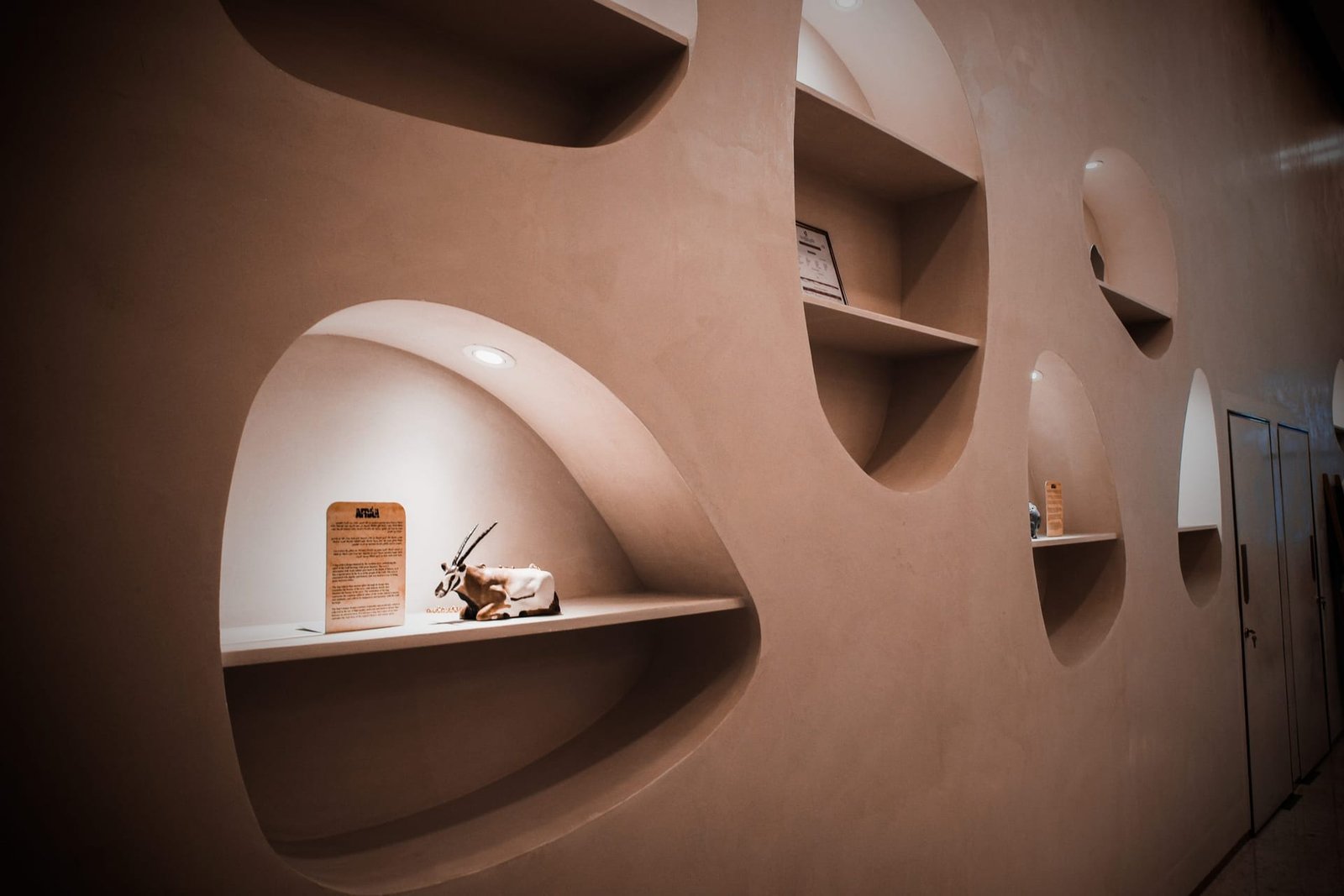
In use, tadelakt develops a patina: subtle variation in sheen where hands, water and soap meet it, and deeper tone through the wet zone. On the curved Microtadelakt walls at Afraa Boutique, Place Vendôme Lusail, that movement across the surface is the point of the finish.
What tadelakt does not do is fail uniformly the way a coating does. There is no film to lift at an edge and no seam to open. Problems, when they arrive, are local — a dull patch, a scratch, a scale mark — and they are dealt with locally.
Anyone who wants a surface that stays visually identical for a decade should look at microcement instead, which is durable and low-VOC and holds a flatter appearance. Our comparison of polished plaster, tadelakt and microcement covers the trade-off.
Repairing scratches, dull patches and scale marks
A dull patch usually means the soap layer has been stripped in that spot. Clean it, let it dry, re-soap the area, blend outwards and buff. In most cases the sheen comes back and no plastering is needed.
Light scratches can be burnished back with a smooth stone and re-soaped. Deeper damage, a chip at an external corner, or a section that has been etched by an acidic cleaner needs a plasterer: the area is cut back, re-applied, burnished and soaped so it merges with what surrounds it.
Because tadelakt is mineral through its thickness, a competent repair disappears in a way that a repaired painted or coated wall never quite does. It does have to be done by someone who works the material regularly, which is one reason our applicators are on our own payroll.
Getting tadelakt right in a Gulf bathroom
Many maintenance problems start at specification rather than in use. Falls to drainage, the waterproofing behind the plaster, movement joints, and how the tadelakt meets glass, stone and metal all decide how much water ends up sitting on the surface later.
We supply and install, and we are the exclusive Middle East distributor for the lime and tadelakt systems we apply, including Clayworks Tadelakt and Cemher Microtadelakt. Clay plaster is a different tool altogether and belongs on dry interior walls, never in a shower, as we set out in clay plaster in bathrooms and kitchens.
If you are planning a bathroom or hammam in Dubai or Abu Dhabi, send the drawings and a sense of the finish you want through our enquiry page, or message us on WhatsApp +971 50 136 0506. We will walk through the aftercare with you before anything is applied, not after.