
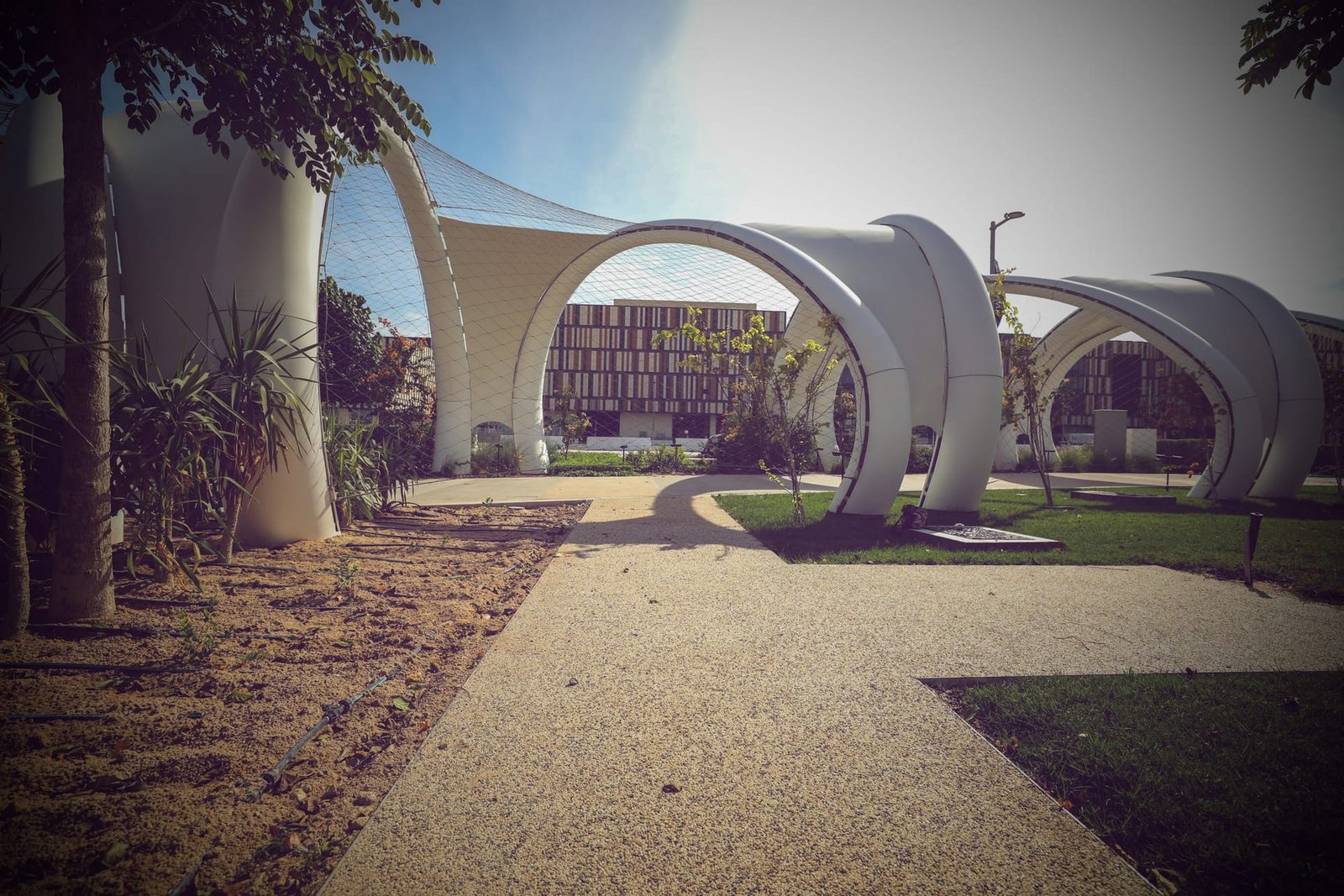
A resin bound surface in the UAE lives or dies on three things: a UV-stable resin system, a sound base that does not move, and routine removal of blown sand. Installed and maintained that way, it handles Gulf sun, surface heat and daily driveway traffic without going brittle or shedding stone.
How does resin bound aggregate cope with UV and heat?
The binder is the variable, not the stone. Resin systems divide broadly into types that yellow and chalk under prolonged ultraviolet light and types formulated to hold their colour, and external work in the Gulf should be specified with the UV-stable family. Ask any installer to confirm in writing which system is being supplied.
The aggregate itself is inert. Natural stone does not fade in sunlight, so a surface that has aged badly has almost always aged at the binder or at the base, rather than in the stone you can see.
Heat brings a second consideration: movement. The surface expands and contracts with whatever it is laid on, so movement joints in a concrete base must be carried through the resin layer rather than covered over. A bridged joint cracks, and the crack finds the surface sooner or later.
Does a resin bound surface get hot underfoot?
Every external surface in full Gulf sun gets hot. What you can influence is how much solar radiation it absorbs, and that is largely a matter of colour. Pale aggregates reflect more and run cooler than dark ones, which is why sand, cream and light grey blends dominate Gulf specifications for pool surrounds and barefoot areas.
Shade planning changes surface temperature more than aggregate tone does. Canopies, pergolas and tree cover do the heavy lifting, which is one reason promenade schemes pair generous shade with a light surface.
If bare feet are part of the brief, look at samples outdoors before deciding. Blends that read as subtle on an indoor sample board behave differently at midday. Sample panels of the aggregate blends travel to your office or to site - ask for one.
Sand and dust: the real maintenance job in the Gulf
In the UAE, the thing that changes how a resin bound surface looks is not sunlight, it is sand. Fine windblown material settles into the surface texture, dulls the colour and, over time, blinds the voids that make the surface permeable.
The fix is frequency rather than effort. Blowing or sweeping on the same cycle as the rest of the landscape maintenance keeps the stone reading clean, and a periodic wash lifts what brushing leaves behind.
Keep soil, mulch and irrigation silt off the paving where you can. A planting bed that washes fines across a permeable surface after every irrigation cycle will clog it faster than any amount of foot traffic. There is more on how the drainage works in is resin bound aggregate permeable.
Traffic, turning tyres and driveway loads
Pedestrian traffic is undemanding. Vehicles are the test, and the loads that mark a driveway are point loads and turning forces: dry steering at a standstill, the same tight turning circle every day, jack and axle-stand feet, and delivery or skip lorries on a build-up designed for a family car.
Most of that is designed out at the base. A driveway needs to be specified for vehicles from the start, not adapted from a footpath, with the depth and edge restraint to match. Where a surface has rutted or lifted, the base is usually the culprit rather than the resin.
Simple site habits help. Spread the load under jacks and stands with a board, avoid dragging steel skips across the surface, and lift spilled fuel or oil promptly instead of letting it soak.
What actually causes a resin bound surface to fail?
Very little of it is the resin itself. In practice the recurring causes are a base that moves or holds water, laying onto a damp or contaminated substrate, mixing that is short on time or off ratio, working outside the temperature and humidity window the system is designed for, and edges that were never properly restrained.
Gulf conditions sharpen the fourth of those. Surface temperatures on an exposed base in summer can push cure behaviour out of the sensible range, so work is planned around the temperature of the slab rather than the time on the programme. Early starts, shaded pours and staging are part of the method, not an inconvenience to be argued away.
The material behaves as a system. Base, priming, mix, depth, edging and cure form one chain, and a weak link anywhere shows up on the surface within the first year. That is a large part of why the artisans who lay our work are on our own payroll rather than subcontracted.
How do you clean and maintain a resin bound driveway?
Routine care is brushing or blowing to keep sand and debris out of the texture, plus an occasional wash. Use a wide fan nozzle at moderate pressure, held well back and kept moving. A narrow jet held close will cut stone out of the matrix and leave a scar that stays visible.
Deal with spills quickly. Oil, fuel, paint and solvents should be lifted with absorbent material and then cleaned, rather than left to sit. Avoid metal-bladed scrapers, aggressive solvent cleaners and de-icing chemicals.
Weeds, when they appear, generally seed into debris lying on the surface rather than growing up through the layer, so they come away with the debris. Keeping the surface clean is the weed strategy.
Repairs, and how the surface ages
Localised damage can be cut out and re-laid. A clean saw cut, removal back to a sound base and a fresh mix will restore the area. This repairability is one of the practical advantages of a full-depth bound material over a scattered one, as set out in resin bound vs resin bonded.
Be realistic about colour on a repair. A patch laid years later sits next to a surface that has been washed, walked on and sunlit, so it can read slightly fresher for a period before it settles in. Keeping a labelled bag of the original aggregate from the job is cheap insurance.
Aged well, the surface tends to change slowly and evenly rather than failing in one spot. That behaviour is what makes it workable in public realm schemes such as the Addaset promenade paving at Lusail Boulevard.
Resin bound driveways and public realm across the UAE
Earth Layers supplies and installs Addagrip Addaset resin-bound aggregate from our base in Dubai Industrial City, with our own artisans laying the work. We are the exclusive Middle East distributor for the materials we install, which means the same team answers for the specification and for the surface a year later.
For a villa driveway in Dubai or Abu Dhabi, a hotel forecourt or a promenade, the first questions are the same: what is the base, what traffic does it carry, where does the water go, and how should the stone read at midday. If you are still choosing the material, start with what resin bound aggregate is.
Send drawings or site photographs through enquire, or message the UAE team on WhatsApp +971 50 136 0506, and we will talk through the build-up before anyone commits to a finish.